

Residential treatment at Catalina Behavioral Health is a structured, live-in behavioral health program for adults age 18 and older. It may support substance use, mental health, trauma-related, or co-occurring concerns when clinical assessment supports this level of care.
Catalina’s residential program is not a hospital inpatient unit and does not provide on-site medical detox or emergency care. If detox, stabilization, or medical clearance is needed before admission, our team can discuss appropriate outside options. Treatment recommendations, program length, and insurance coverage vary by individual circumstances.
Clinically Reviewed By

Laura Tyndall is a Psychiatric Nurse Practitioner & Licensed Clinical Social Worker who is proud to serve as Clinical Director at Catalina Behavioral Health.
Insurance Accepted
Accreditations & Licensing

All information shared with our team is protected under HIPAA. We will never share your personal information without your written consent.
Admissions
Accepting Admissions 24/7
regarding a medical or mental health condition.
Program Statistics
Our Arizona Residential Treatment Programs Are Built Around Your Needs and Goals in Seeking Support
Residential treatment provides a structured, live-in setting with scheduled clinical services and recovery support for adults whose needs can be met safely outside a hospital.
Residential treatment can combine structured clinical services, individual and group therapy, medication management when appropriate, and recovery support. Program eligibility and length of stay are individualized after assessment and can change based on clinical needs, progress, safety considerations, insurance authorization, and discharge planning.
Some adults may need medical detox or medical clearance before admission; Catalina does not provide onsite medical detox.
Users may also benefit from the time spent at a therapeutic retreat, where they can devote their whole attention to resolving the issues that have been interfering with their health and happiness.
This method of treatment, like residential treatment centers, has found widespread acceptance among mental health services since it allows clients to focus entirely on their recovery while removing them from their usual environments.
Keep reading to learn about Catalina’s adult residential program and the factors used to determine whether this setting may be appropriate for an individual.
Find Residential Treatment Support at Catalina!
What Is a Residential Treatment Center for Behavioral Health?

In order to fully benefit from the rigorous therapeutic treatments provided by residential treatment centers, clients must relocate to the facility for the length of their care. Safe, effective, evidence-based care is available at these facilities for clients who have suffered severely as a result of difficulties, including drug misuse, addiction, and/or other addiction or mental health crises.
Residential treatment centers provide clients with the chance to work with trained mental health specialists to address their emotional, behavioral, and mental health concerns. A woman breaks down in tears during group therapy.
Residential treatment at Catalina Behavioral Health serves adults age 18 and older with substance use, mental health, trauma-related, or co-occurring concerns when clinical assessment supports this level of care. Adults seeking a residential setting primarily for psychiatric concerns can review Catalina’s adult residential mental health treatment information.
Participants in these programs often attend after undergoing diagnostic evaluations and screenings, with evidence-based approaches as outlined by SAMHSA (the Substance Abuse and Mental Health Services Administration).
What Types of Therapy Are Offered at Accredited Residential Treatment Centers in Arizona?
Many different types of therapy that have been shown to be effective are typically offered as part of the treatment process at residential treatment programs. The healing process at these treatment centers is aided by a combination of individual and group therapy sessions, complemented by family therapy sessions, which provide continued care even after an individual has experienced positive treatment outcomes.
Residential programs’ primary strategy may change depending on the client who is seeking treatment services. However, these residential programs may include some or all of the following forms of therapeutic relief:
- Art therapy
- Physical exercise
- Family therapy sessions
- Meditation
Accredited residential treatment facilities such as our offerings at Catalina provide people with the resources they need to enhance their quality of life, learn new skills, and build meaningful connections with others.
The Importance of a Healing Environment During Residential Care

Residential treatment centers (also called RTCs) often provide one of four distinct approaches to care.
- Besides intensive counseling, life skills training, substance abuse treatment, and academic instruction are common components of residential clinical treatment programs.
- Residents in group residential communities (also called group homes or halfway houses) are provided with a supportive family environment in order to better their emotional well-being, social skills, and coping mechanisms for dealing with mental health issues.
- Residents of residential programs with a farm or labor component benefit from daily employment in addition to therapeutic therapy, which aids in their development and rehabilitation.
- In complexes similar to apartment living, people can maintain a higher level of autonomy than they could in alternative treatment environments.
How Much Does an RTC in Arizona Cost?
The cost of staying in a residential treatment or retreat facility is a major drawback of these types of facilities. The cost of therapy in a residential setting could be substantial.
Because of this, those without financial means or private insurance can face obstacles to getting care. Even those looking for a ‘court ordered rehab near me,’ typically pay for their program, meaning cost is very much a concern.
When it comes to paying for residential treatment, some institutions do provide financial aid in the form of scholarships or work-study programs.
For the vast majority of people, financial constraints continue to prevent them from receiving care. The Mental Health Parity and Addiction Equality Act was signed into law in November 2013 to address these and other issues. Inpatient treatment for drug addiction and mental health concerns is becoming more widely covered by health insurance policies.
In reality, the legislation makes denying treatment for mental health issues illegal, and the coverage is expected to be similar to that granted for bodily disorders. When these policies are implemented, those who previously lacked access to effective treatment alternatives will now have that opportunity.
What are the Benefits of Arizona Residential Treatment Programs?

One might find significant differences between the various residential treatment facilities. There are a few consistent, underlying factors that, in spite of the variations, help explain why residential may be highly productive.
Constant supervision and access to staff members at all times is a major benefit of residential treatment programs as compared to less intensive settings. Although it may feel intrusive at times, consistent follow-up is essential for monitoring a patient’s development, spotting potential trouble spots, and preventing relapse.
Having some space from one’s current position and the people and places that may be upsetting may aid in developing discernment and perspective, affording the option of surrounding oneself with more supportive and positive people.
Treatment approaches that go beyond traditional “talk therapy” are commonplace in residential institutions for substance abuse. Many residential treatment facilities take a holistic approach when it comes to healing the whole person (body, mind, and spirit). Trauma, horse, art, and surf therapy are some of the most common approaches to recovery in these environments.
Catalina’s residential program follows a structured daily schedule that may include individual and group therapy, recovery-focused activities, skills development, recreation, and medication management when clinically indicated. Specific services and appointments depend on the individualized treatment plan.
Catalina Offers Addiction and Mental Health Treatment Support
What to Look for In an Effective Arizona Residential Treatment Program
Certifications and/or Accreditations
All residential treatment centers should be licensed by the state in which it is located. The standards for obtaining a license vary significantly from state to state, but all such facilities should be accredited as well.
Many residential treatment providers, and certainly our services at Catalina, go above the minimum requirements set by licensing authorities by pursuing extra certification. Although it’s not necessary, it’s wise to look for a facility that has earned accreditation in addition to its license.
At Catalina, we’re proud to be Joint Commission accredited and dedicated to continuously improving our staff training methods as well as our client services.
Planning for Higher Medical Needs
If a medical emergency occurs, emergency services, a hospital, or an urgent-care provider must evaluate and treat it. Catalina does not provide hospital or emergency medical care on site.
Immediate danger, serious injury, or acute self-harm risk requires 911 or the nearest emergency department; in the United States, 988 is also available for crisis support. For non-emergency questions about adult residential treatment or program fit, contact Catalina’s admissions team.
Aftercare Planning and Relapse Prevention

Discharge planning, or aftercare planning, occurs immediately after residential treatment(there are some exceptions to this based on the individual). The client and their treatment team will meet to discuss the next steps in the client’s care after they leave the residential treatment facility.
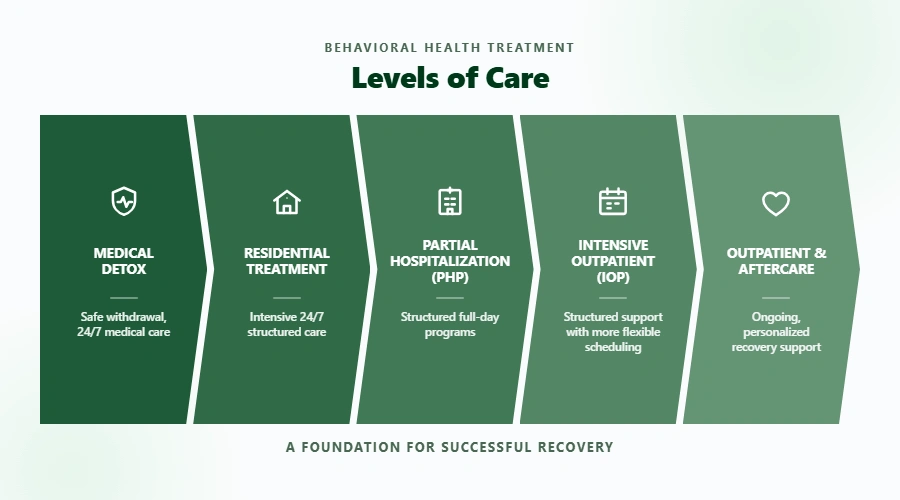
Depending on clinical needs, next steps may include PHP or IOP. A step-down plan may also include alumni support after formal treatment.
Efficient and Qualified Staff Members
Residential programs should maintain staffing appropriate to their licensed capacity, current census, client needs, and required level of supervision. Staffing levels, credentials, and responsibilities vary by facility and program.
Private residential institutions attempt to give comprehensive treatment experiences in a more personal atmosphere that supports healing holistically, as opposed to hospital-based inpatient care.
Catalina Behavioral Health is experienced in offering these types of therapy and more. These programs are designed to help you get the most out of your time in care by addressing your whole spectrum of needs so that you may concentrate on your recovery.
Assessment and Medical Clearance Before Residential Admission

Catalina does not provide on-site medical detox. During the intake process, adults are assessed to determine whether residential treatment may be appropriate or whether medical detox, hospital-based stabilization, medical clearance, or another outside pre-admission step is needed first.
Each client is surrounded by peers who are willing to participate in individual and group-based therapy methods, so you may draw strength from the company of others who can relate to what you’re going through.
Recuperation in this setting looks significantly different from what you often see in movies and TV shows. These sorts of programs are meant to nurture you at all levels of care, functioning as your guide and partner in recovery and always trying to pull out your strengths rather than stripping you of your dignity. Now is the time with the greatest potential for improvement, and healing can begin.
What Can Residential Treatment Include Over Time?
Residential treatment does not follow a guaranteed week-by-week path. The phases below describe experiences that may occur, but their sequence and timing depend on the adult’s assessment, treatment plan, participation, progress, and continuing-care needs.
Admission and Orientation
Before admission, Catalina evaluates whether residential treatment may be appropriate and whether an outside detox, medical-clearance, or hospital step is needed first. On arrival, staff may review immediate needs, program expectations, and the initial schedule.
When an adult transitions from another provider, coordination may occur with the client’s consent and when relevant records or contacts are available. Family or support-person involvement also depends on consent and the individual situation.
Clients may receive an orientation to the facility, schedule, and available resources. Staff can answer questions about the program and help the adult understand what to expect.
The treatment team completes or refines the assessment and individualized plan during the early phase of care. Services, clinician appointments, and daily activities vary according to clinical need and current program structure.
Early Adjustment
Early in residential treatment, clients may focus on adjusting to the structured environment, learning the schedule, and beginning individual and group work.
Building therapeutic relationships takes time, and adults may experience a range of emotions while adapting to treatment. The team can review concerns and adjust the plan when clinically appropriate.
Active Treatment and Skill Development

As treatment continues, clients may participate in individual therapy, groups, coping-skills work, psychoeducation, and other services included in their plan. The pace and mix of services vary by person.
Therapy may address symptoms, patterns, triggers, relationships, and coping strategies at a pace intended to support safe participation. No single therapeutic experience or response is universal.
Some treatment topics can be emotionally difficult. Clinicians may use trauma-informed approaches and adjust the pace or method according to the adult’s response and treatment plan.
Progress is not always linear. The treatment team can review symptoms, functioning, participation, and safety and modify recommendations when clinically appropriate; no particular emotional reaction indicates a guaranteed stage of recovery.
Catalina Offers Addiction and Mental Health Treatment Support
Transition and Continuing-Care Planning
Timing for discharge or a possible step-down is based on individualized assessment rather than a predetermined week. The team may consider symptoms, safety, functioning, progress, home environment, support needs, and program availability.
Before discharge, the adult and treatment team may develop continuing-care recommendations that include Catalina services, outside clinicians, community resources, or recovery supports. A smooth transition or particular outcome cannot be guaranteed.
While in treatment, you may have also been given a medicine regimen, if necessary. Our psychiatrists individualize medication plans and monitor each client’s progress and potential adverse effects; outcomes vary.
When medication management is part of an individualized treatment plan, a qualified prescriber may monitor response, tolerability, and potential adverse effects. Medication changes, response, and timing vary by person; stabilization by a particular date or any specific outcome cannot be guaranteed.
Therefore, it is essential that you maintain a degree of adaptability and adjust the nature and length of therapy to your specific needs as they evolve during the course of care.
Get Support in a Welcoming Residential Setting at Catalina Today

At Catalina Behavioral Health, we offer a wide range of treatment programs to accommodate clients of all types and backgrounds. We offer multiple therapeutic solutions to provide various options and room for growth during treatment.
To find out how we can help you achieve your goals of recovery, contact a member of our Admissions team confidentially today.
FAQs About Residential Care at Catalina
What is residential treatment at Catalina?
Residential treatment is a structured level of care where clients live in a supportive treatment setting while receiving therapy, clinical support, recovery planning, and help for substance use, mental health, or dual diagnosis concerns. Whether residential care is appropriate depends on an individual assessment.
Who may benefit from residential treatment?
Residential treatment may be appropriate for people who need more structure than outpatient care can provide, have ongoing substance use or mental health symptoms, need stabilization after detox, or would benefit from a supportive environment away from daily triggers. Clinical fit must be assessed individually.
How long does residential treatment last?
The length of residential treatment varies by clinical needs, progress, insurance authorization, safety considerations, and treatment goals. Some clients need a shorter stay, while others benefit from a longer period of structured support before stepping down to PHP, IOP, or outpatient care.
Can insurance cover residential treatment?
Insurance may help cover residential treatment when plan benefits, medical necessity, and authorization requirements are met. Coverage varies by policy, deductible, copay, coinsurance, network status, and payer rules. Verification can help estimate benefits, but does not guarantee approval or payment.