


Hospital inpatient mental health care and residential behavioral health treatment are different levels of care. Hospitals may provide emergency evaluation, acute psychiatric stabilization, or medical monitoring. Residential programs provide structured live-in therapy for people who are medically stable and appropriate for that setting.
Catalina Behavioral Health provides residential and outpatient treatment for adults age 18 and older. Catalina is not a hospital and does not provide emergency care, hospital-based psychiatric stabilization, or on-site medical detox. Eligibility depends on clinical assessment, safety needs, medical appropriateness, and program availability.
Clinically Reviewed By

Mabel has a proven track record of delivering high-quality care in diverse healthcare settings, including behavioral hospitals, correctional facilities, and crisis recovery units.
Insurance Accepted
Accreditations & Licensing

All information shared with our team is protected under HIPAA. We will never share your personal information without your written consent.
Admissions
Accepting Admissions 24/7
regarding a medical or mental health condition.
Program Statistics
Getting Residential Services for Mental Health in Tucson
The phrase inpatient mental health treatment is sometimes used broadly, but hospital inpatient care and residential behavioral health treatment are not interchangeable. A hospital may provide emergency evaluation or acute medical and psychiatric stabilization. Residential treatment provides a structured live-in therapeutic setting for people who are medically stable and appropriate for that level of care.
At Catalina, our Joint Commission-accredited residential mental health programs serve adults age 18 and older when clinical assessment supports this level of care. Catalina is not a hospital and does not provide emergency care, hospital-based psychiatric stabilization, or on-site medical detox.
Keep reading to find out why Catalina Behavioral Health leads the way in providing accessible mental health treatment for Arizona and beyond!
The Evolution of Inpatient Mental Health Treatment Providers
Institutions for mental health care now serve a very different role than they did fifty years ago. The original purpose of psychiatric institutions was to isolate and segregate persons with mental illness from society.
The goal of any contemporary mental health organization is to improve patients’ mental health by providing them with a secure, therapeutic setting that helps ease a return to daily health and functional well-being.
Our adult residential mental health program is based in Tucson and provides structured behavioral health treatment based on individualized clinical assessment and treatment planning.
Catalina Offers Addiction and Mental Health Treatment Support
When Hospital-Level Inpatient Mental Health Care May Be Needed
Hospital-level inpatient care may be needed when a person requires emergency evaluation, acute psychiatric stabilization, or medical monitoring that cannot be provided safely in a residential setting. Anyone in immediate danger should call 911 or go to the nearest emergency department; people in the United States can also call or text 988 for crisis support.
All of our programs at Catalina Behavioral Health use a trauma-informed approach, whether to mental health or addiction treatment, to better help clients address underlying causes and achieve more successful outcomes.
When it comes to mental health care, the appropriate setting depends on current symptoms, immediate safety, medical needs, functioning, treatment history, and professional assessment. Hospitalization may be recommended for acute needs, while residential or outpatient care may be appropriate in other circumstances.
Suicidal thoughts or a risk of self-harm require individualized assessment. If someone may act on those thoughts or is in immediate danger, call 911 or go to the nearest emergency department; in the United States, call or text 988 for crisis support. When there is no immediate danger—or after acute stabilization—Catalina’s admissions team can discuss whether adult residential or outpatient treatment may be an appropriate next step.
At Catalina, our programs welcome residential treatment clients from Phoenix, Scottsdale, Flagstaff, and across Arizona.
What Supports Effective Residential Mental Health Treatment?

Evidence-based residential treatment aims to help adults manage symptoms, strengthen functioning, and work toward individualized goals without hospital-level medical monitoring. Response and outcomes vary by person.
This is achieved through a variety of therapies aimed at alleviating pain and improving emotional well-being:
- One-on-one sessions with a mental health professional or several mental health professionals
- Family therapy and other activities have proven effective for a specific mental health disorder. This includes journaling and possibly holistic activities.
- Medication management
- Group therapy with other adults participating in residential behavioral health treatment
- Support groups with all of the above included
- Clients are closely monitored for physical and mental health and then possibly transitioned to outpatient programs
Adult residential treatment may involve therapists, behavioral health staff, case management, and qualified prescribers when clinically indicated. Staff roles and available services vary by program. Catalina provides structured residential support, not continuous hospital-level medical monitoring.
The Goals of Short Term Residential Mental Health Treatment
A person in need of immediate treatment often has an acute mental health disorder characterized by a rapid worsening of mental health symptoms. As soon as things have visibly stabilized, the person may work on regaining or developing coping mechanisms to better handle stressful situations in the future.
Although each adult’s goals are individualized, the treatment team may work with a client to:
- Maintain stable mental, emotional, and behavioral habits
- Find out what potentially triggered the issue to prevent future challenges
- Evaluate the efficacy of many treatments to pick the best one
- Locate and make contact with loved ones for support during and following treatment
- Improving one’s ability to deal with stress following hospitalization in everyday life
- Gain more background on various mental health conditions
- Prepare to transition by recommending third-party organizations that provide group therapy
Residential mental health programs use structured schedules to support participation in therapy, skills work, daily routines, and recovery-focused activities. The specific schedule and level of supervision vary, and Catalina residential care should not be confused with crisis stabilization or hospital inpatient treatment.
The Freedom to Overcome Mental Illness

Residential treatment is intended to provide a structured therapeutic environment while an adult works on individualized goals and prepares for an appropriate next level of care. Progress and outcomes vary.
Many different types of facilities are used to offer care and treatment for people with mental health problems. The setting and degree of care provided will be based on a number of variables, including the specifics of the individual’s mental illness, the state of their health, and the prescribed or advised course of treatment.
Residential treatment programs and outpatient care are the three most common forms of mental health treatment settings. Some services in the field of mental health treatment are also made available via the use of the Internet and other forms of electronic communication.
The Most Common Forms of Mental Health Treatment

Hospital inpatient mental health care may include emergency evaluation, acute psychiatric stabilization, and medical monitoring. Services and length of stay vary by person and facility. Catalina’s residential programs are not hospital inpatient care.
A person with acute psychiatric or medical needs may require hospital-level care. After those acute needs are addressed, residential, partial hospitalization, intensive outpatient, or outpatient treatment may be considered based on an individualized assessment.
Hospital and psychiatric-facility capabilities vary. Some outside facilities provide medical stabilization or detoxification, but these services are not provided at Catalina. Adults who need detox, emergency care, or hospital-level stabilization must receive that care through an appropriate outside provider before admission to Catalina can be considered.
Although uncommon, mental inpatient facilities and/or drug misuse units can be found in general medical and surgical institutions. Unlike a traditional psychiatric facility, they provide treatment options that might otherwise be unavailable.
Licensed Dual Diagnosis Treatment
What are the Different Inpatient Mental Health Rehab Settings?
Residential mental health treatment offers a structured, home-like setting, but it does not provide the same emergency, acute-stabilization, or medical capabilities as a hospital. Services vary by facility and should be matched to the adult’s individual clinical and safety needs. Examples include:
Psychiatric Residential
Individuals who are unable to operate freely due to a mental health condition, such as schizophrenia, borderline personality disorder, bipolar illness, or a dual diagnosis (mental health diagnosis plus substance misuse problems), are the target population for psychiatric residential institutions.
Substance Use and Alcohol Treatment

Residential substance-use treatment facilities are not necessarily hospitals. Some outside providers offer medical detoxification or withdrawal management; Catalina does not provide those services on site. Its admissions team can discuss pre-admission coordination or referral when those services may be needed.
Length of residential treatment varies according to clinical need, progress, program availability, and the individualized plan. Catalina does not guarantee a 30-day or other fixed stay.
What’s the Difference Between a Residential Treatment Center and an Inpatient Mental Health Facility?
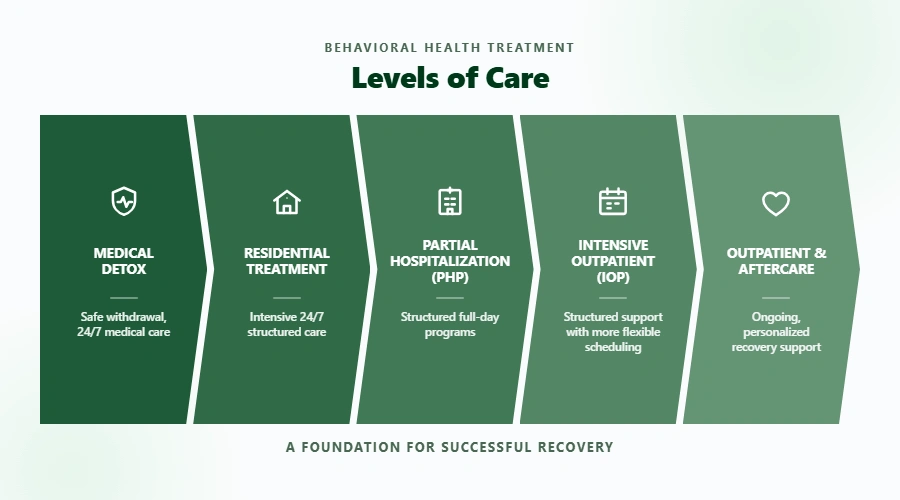
Hospital inpatient care and residential behavioral health treatment are separate settings, even though the word “inpatient” is sometimes used informally for both.
Hospitals may provide emergency evaluation, acute psychiatric stabilization, and medical monitoring. Residential programs serve people who are medically stable and appropriate for structured live-in behavioral health treatment. One setting does not automatically replace or follow the other.
Residential treatment generally serves people who do not require hospital-level emergency or medical care. Staffing and services vary by facility. Catalina provides structured adult behavioral health treatment based on individual assessment and program fit.
Residential treatment generally offers a more home-like therapeutic setting than a hospital, but staffing, services, and supervision differ by facility. Catalina does not provide hospital or emergency care.
After hospital evaluation or stabilization, a person may step down to residential, partial hospitalization, intensive outpatient, or outpatient treatment when clinically appropriate. Catalina’s admissions team can discuss adult program options, availability, and next steps.
Catalina Offers Addiction and Mental Health Treatment Support
Discuss Adult Residential Mental Health Treatment at Catalina
At Catalina Behavioral Health, we understand how life-altering mental health disorders can be. If you or someone you love is suffering from a serious mental illness, including depression, anxiety, OCD, PTSD, and other mental health disorders, we offer treatment programs and additional resources, including medication and nutrition therapy, to assist on the road to recovery.
Catalina Behavioral Health is in-network with Aetna, Cigna, Blue Cross Blue Shield, UHC/UMR, and Molina commercial plans, as well as other carriers. Because benefits differ by policy, admissions can confirm how a specific plan applies, explain expected costs, and assist with authorization requirements. Call 520-999-2560 for a confidential benefits review and to discuss adult treatment options.
See our guide to inpatient mental health facilities that accept TRICARE.
For more information on how we can assist, contact a member of our admissions team confidentially today!