
Catalina Behavioral Health is in-network with Blue Cross Blue Shield for adult addiction and mental-health treatment. Because BCBS policies can use different networks and benefit administrators, admissions will confirm how the specific policy applies.
Call 520-999-2560 for a confidential benefits review and to discuss adult treatment options. Benefits, authorization, approved duration, and member costs differ by policy; verification does not guarantee coverage, payment, availability, or admission.
Reviewed By

Christina brings over two decades of diverse healthcare and business leadership experience to her current executive roles.
Insurance Accepted
Accreditations & Licensing

All information shared with our team is protected under HIPAA. We will never share your personal information without your written consent.
Admissions
Accepting Admissions 24/7
regarding a medical or mental health condition.
Program Statistics
Using BCBS Insurance for Mental Health and Addiction Treatment
Catalina Behavioral Health is in-network with Aetna, Cigna, Blue Cross Blue Shield, UHC/UMR, and Molina commercial plans, as well as other carriers. Because benefits differ by policy, admissions can confirm how a specific plan applies, explain expected costs, and assist with authorization requirements. Call 520-999-2560 for a confidential benefits review and to discuss adult treatment options.
A benefits review can clarify how a member’s BCBS policy applies; it is an estimate, not a guarantee of payment.
Does Blue Cross Blue Shield Cover Treatment at Catalina?
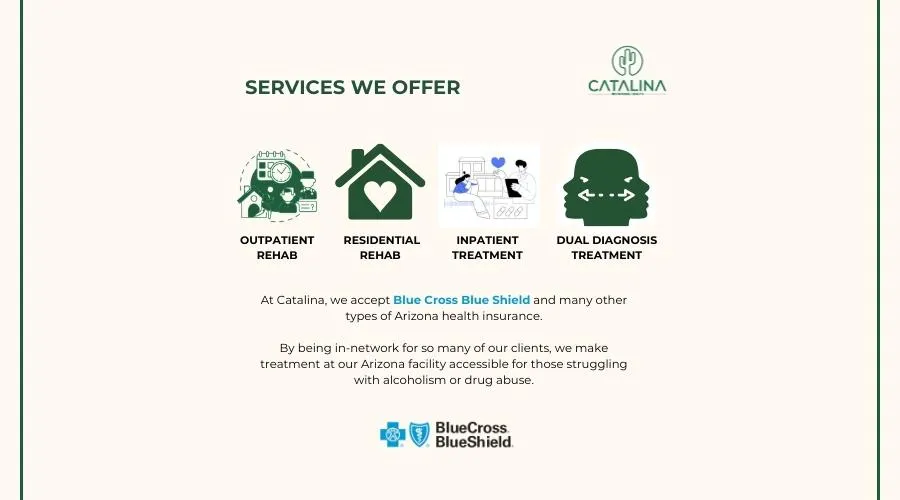
Yes. Catalina Behavioral Health is in-network with Blue Cross Blue Shield for adult addiction, mental health, and dual-diagnosis treatment in Tucson.
Insurance verification is not a promise of payment or admission. It is an important first step in understanding what your plan may allow and what financial questions need to be reviewed before treatment begins.
Confidential BCBS Insurance Verification
What Does Blue Cross Blue Shield Cover and What Is the Price?
The cost of treatment with Blue Cross Blue Shield depends on the individual plan. Even when a service is covered, the member may still have a deductible, copay, coinsurance, out-of-pocket maximum, or authorization requirement.
Catalina Behavioral Health can help review the details of your plan before admission whenever possible. Admissions can explain the information available during verification and help you understand what questions still need review.
What are the Steps for Verifying BCBS insurance with Admissions?
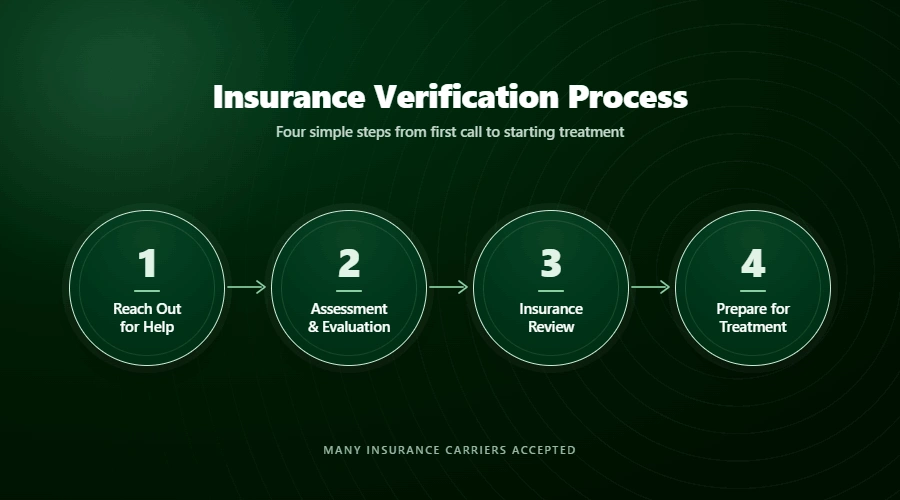
Here is the typical process when you contact our admissions staff for assistance with insurance verification:
- Call Catalina Behavioral Health to speak with admissions. Calls are confidential.
- Share your insurance card information: Admissions may ask for the member ID, group number, policyholder name, date of birth, and the phone number listed on the card.
- Review available benefits: Admissions can review available plan details, including network status, deductible, copay, coinsurance, out-of-pocket maximum, and authorization requirements.
- Discuss possible next steps: After verification, admissions can explain what the plan may show and what additional review may be needed before treatment begins.
What Levels of Care Are Covered by BCBS Insurance Rehab Coverage?
Blue Cross Blue Shield plans may review benefits for several levels of behavioral health and addiction treatment.
Using BCBS Rehab Coverage for Medical Detox
Coverage for medically necessary detox services depends on plan terms, medical necessity, and the outside detox, hospital, or withdrawal-support provider involved. Catalina Behavioral Health does not provide on-site medical detox, but our admissions team can help review your plan and discuss whether detox referral, medical clearance, or another pre-admission step may be needed before treatment at Catalina.
Medical detox is often the first step when a person needs help stopping alcohol, opioids, benzodiazepines, or other substances that can cause withdrawal symptoms.
Detox focuses on helping the body clear the substance while trained staff monitor symptoms, comfort, safety, and medical concerns.
Does BCBS Cover Inpatient Rehab and Residential Treatment?
Residential treatment provides a structured treatment setting where adults live on-site while receiving care. This level of care may be appropriate for people who need more support than weekly appointments or outpatient therapy can provide.
Residential care may include therapy, group support, relapse prevention planning, mental health support, medication-related services when appropriate, and daily structure away from triggers at home. It is not the same as a hospital stay, but it does provide a higher level of support than outpatient care.
Some BCBS plans include residential treatment benefits and authorize care in stages, with continued care reviewed as treatment progresses.
Outpatient Rehab Using BCBS: Obtaining Group Therapy and Counseling Support
Outpatient therapy and counseling are services a person attends while living at home or in another supportive environment. This may include individual therapy, group counseling, family counseling, or other behavioral health support.
Outpatient care may be used as a first step for some adults or as continuing support after a higher level of care. It can help people work on substance use, mental health symptoms, relationships, coping skills, relapse prevention, and daily life challenges.
BCBS plans may apply different visit limits and cost sharing to outpatient therapy than to residential or day-treatment services.
Using BCBS for Partial Hospitalization Program Costs
A partial hospitalization program, or PHP, is a structured day program for outpatients. It usually provides several hours of treatment on scheduled days, but the person does not stay overnight.
Partial hospitalization can be helpful for adults who need more support than standard outpatient therapy but do not require 24-hour residential care. A PHP schedule may include group therapy, individual support, skill-building, relapse prevention, medication-related services when appropriate, and mental health treatment.
Some BCBS plans include PHP benefits and request clinical documentation before authorizing this level of care.
Using Blue Cross Blue Shield for IOP Costs
An intensive outpatient program, or IOP, offers scheduled treatment several days per week while the person continues living at home or in another supportive setting. IOP is more structured than standard weekly therapy, but it does not include overnight care.
IOP may be used when a person needs consistent support for substance use, mental health concerns, or both. It may also be part of a step-down plan after residential treatment or PHP.
Services may include group therapy, individual counseling, relapse prevention, coping skills, mental health support, and recovery planning. The exact schedule and services depend on the program and the person’s needs.
Some BCBS plans include IOP benefits. Admissions can check whether this level of care is included in the member’s policy.
Medication management and medication-assisted treatment
Medication management means a qualified provider reviews, prescribes, monitors, or adjusts medications as part of a person’s mental health or substance use treatment plan. This may involve medications for depression, anxiety, mood symptoms, sleep concerns, cravings, or other treatment-related needs.
Medication-assisted treatment, MAT, refers to the use of approved medications along with counseling and behavioral support for certain substance use disorders. MAT is most often discussed in connection with opioid use disorder or alcohol use disorder, but the appropriate treatment plan depends on the person’s needs and a qualified clinical review.
Medication coverage may be split between medical, behavioral-health, and pharmacy benefits, and formulary rules may apply to specific prescriptions.
Does Blue Cross Cover Dual Diagnosis Treatment Programs?
Dual diagnosis treatment means care for both substance use and mental health concerns at the same time. Many adults seeking treatment are dealing with more than one issue, such as alcohol use and depression, opioid use and anxiety, trauma symptoms and substance use, or mood symptoms that affect recovery.
Treating these concerns together can be important because one issue may make the other harder to manage. Dual diagnosis care may include therapy, group support, medication management when appropriate, coping skills, relapse prevention, trauma-informed support, and planning for continued care after discharge.
Some BCBS plans include integrated treatment benefits when substance use and mental health concerns occur together.
Why Blue Cross Blue Shield Covers Mental Health and Co-Occurring Disorders
Substance abusers often require mental health care as part of dual diagnosis treatment programs. Many treatment centers offer a full range of health services, including care for mental health concerns and substance use disorders. This is also known as “co-occurring disorders.”
About 9.2 million American adults suffer from a dual diagnosis or co-occurring disorders. Mood disorders, depression, and anxiety are the most prevalent co-occurring disorders in those who receive treatment for drug addiction.
Treatment for both drug abuse and mental health problems is recognized as an “essential health benefit” under the Affordable Care Act (ACA).
Some health plans include behavioral-health benefits for co-occurring substance-use and mental-health treatment, but no carrier or plan automatically covers every provider, service, or cost. Benefits must be reviewed under the individual policy.
Co-occurring disorder treatment plans often combine behavioral therapy with prescription medication to alleviate the distress caused by both mental illness and addiction. These treatment plans may also address other mental health conditions such as anxiety, depression, or PTSD.
An individualized treatment plan may address substance use and co-occurring mental-health concerns together when clinically appropriate. Recommended services depend on the adult’s assessment and needs.
Catalina Is In-Network with Blue Cross Blue Shield

Catalina Behavioral Health is in-network with Blue Cross Blue Shield and provides adult addiction, mental health, and dual-diagnosis treatment in Tucson.
Structured Therapies BCBS May Approve
Although many methods exist for treating drug addiction, the following are the most often used:
- Cognitive Behavioral Therapy
- Motivational Therapy
- Talk Therapy “One-on-One”
- 12-Step Based Programs
- Family-Centered Psychotherapy
- Positive Reinforcement Therapy
Group and family counseling may support treatment goals when clinically appropriate. Participation and outcomes vary by person, and no specific recovery result can be guaranteed.
Although these approaches differ in detail, they all share a common goal: assisting patients in altering their motivation and developing coping skills to sustain sobriety.
We have seen that long-term abstinence from drugs is more likely to be achieved and maintained with the support of behavioral treatments, which also aid in developing more effective problem-solving abilities.
Does Blue Cross Blue Shield Rehab Coverage Include Long-Term Rehab?
Some BCBS plans authorize longer treatment stays in stages and request continued clinical documentation before approving additional time.
A longer treatment timeline may involve different levels of care, such as residential treatment, PHP, IOP, outpatient therapy, medication management, or continuing care planning. Each part of care may be reviewed differently by the plan.
Catalina Behavioral Health can help explain what your plan may allow and whether ongoing authorization or utilization review may be required.
Get Licensed Treatment Options – Call Now!
What Happens If Blue Cross Blue Shield Doesn’t Cover Rehab?
If a Blue Cross Blue Shield plan does not cover a specific service, level of care, or facility arrangement, Catalina admissions can explain what the verification shows. The team may also discuss other applicable benefits, available payment options, or treatment-planning considerations.
How Do I Verify If a Rehab Accepts My Blue Cross Blue Shield Insurance?

The easiest way to verify BCBS benefits for Catalina Behavioral Health is to call admissions directly at 520-999-2560.
Please have your insurance card nearby when you call. Admissions may ask for the member ID, group number, policyholder name, date of birth, plan type, and any secondary insurance information. With that information, the team can review available benefits and explain what your plan may show for mental health or substance use treatment.
A benefits check may include network status, deductible, copay, coinsurance, out-of-pocket maximum, prior authorization requirements, and whether specific levels of care may be reviewed. Verification is confidential and does not require a commitment to treatment.

What Types of Substance Abuse Does Blue Cross Blue Shield Cover?
Blue Cross Blue Shield plans may include treatment benefits for adults with concerns involving:
Cocaine

If you have concerns involving cocaine use, a Blue Cross Blue Shield plan may include applicable treatment benefits. Residential treatment may be considered based on an individualized clinical assessment rather than insurance status alone.
However, many clients are able to conquer cocaine addiction through outpatient means. Ultimately, this depends on how strong your support system is and your level of conviction during your recovery.
Heroin or Fentanyl
If an adult is seeking help for heroin or fentanyl use, a Blue Cross Blue Shield plan may include benefits for medically necessary detox through an appropriate outside provider and for subsequent behavioral health treatment. Catalina does not provide on-site medical detox. After detox or medical clearance, clinical assessment can help determine whether residential treatment, PHP, IOP, or outpatient care at Catalina may be appropriate. Coverage, authorization, network status, and payment depend on the individual plan.
Support needs and relapse risks vary by person. Residential treatment may be appropriate for some adults based on clinical assessment, but no level of care can guarantee a particular recovery outcome. Important insurance questions include:
- How much coverage is provided by Blue Cross Blue Shield?
- What your out-of-pocket or copay looks like
- How many days are covered by Blue Cross Blue Shield insurance?
Do not assume that a Blue Cross Blue Shield plan will authorize a minimum number of residential days. Approved duration depends on the individual policy, medical necessity, authorization, continued clinical review, and claims processing. Clinical recommendations can support payer review but do not guarantee extended coverage or payment.
Looking at Your Timeline for Opioid Treatment
Additional factors come into play during fentanyl or heroin rehab. Do you plan on transitioning into outpatient care after graduating from inpatient rehab?
Will you participate in medication-assisted treatment? It’s becoming more common for those who suffer from opioid abuse disorder to participate in medication-assisted treatment as a maintenance program, at least until they become comfortable and reintegrate back into daily life, functioning as normal members of society.
Blue Cross Blue Shield Medicaid, employer-sponsored, and commercial products can have different benefits and member costs. No universal assumption about 100% coverage, copays, medication benefits, or treatment costs should be made without reviewing the specific policy.
Crystal Meth or Other Stimulants

Many clients who undergo therapy for stimulants and crystal meth often have questions regarding dual diagnosis.
This is because of the frequency of cases of psychosis and other mental health disorders in combination with stimulant abuse. During dual-diagnosis treatment, both crystal meth abuse disorder and psychosis or other forms of mental health disorder are treated.
We take every measure to make sure this doesn’t happen at Catalina for our clients or their loved ones. It is important to know your treatment is protected and secure throughout your stay, and our Admissions team will make sure you have transparency throughout in terms of costs.
Does Catalina Behavioral Health Take Blue Cross Blue Shield?
Catalina Behavioral Health is in-network with Blue Cross Blue Shield for adult mental-health, substance-use, and dual-diagnosis treatment in Tucson, Arizona. Admissions will confirm how the member’s specific policy applies.
Call us today for immediate assistance with insurance verification.
Find Support Using BCBS Rehab Coverage at Catalina Today

Our team of treatment providers at Catalina Behavioral Health has decades of combined experience in helping those even at the lowest stages of substance abuse disorder to find themselves and remain on a path of continued recovery.
After an assessment, our team develops an individualized treatment plan based on each client’s physical and mental health needs and recovery goals. It takes a village, but with the right team by your side, conquering substance abuse and returning to a high-quality standard of living is possible with Catalina Behavioral Health.
For more information on our program or how we work with Blue Cross Blue Shield or other insurance providers, contact a member of our admissions team today. We’re standing by to answer all your questions and help you take the next step into healing from substance abuse.
Catalina Offers Addiction and Mental Health Treatment Support
FAQ: Blue Cross Blue Shield and Rehab
Does Blue Cross Blue Shield cover addiction or mental health treatment?
Many Blue Cross Blue Shield plans include behavioral health benefits, but coverage depends on the member’s specific policy, medical necessity, level of care, authorization rules, deductible, copay, coinsurance, and network status. Benefits should be verified before treatment begins.
Can I use BCBS insurance at Catalina Behavioral Health?
Catalina can help verify Blue Cross Blue Shield benefits and explain how the plan may apply to treatment. Coverage can vary by state, employer group, plan type, and service, so verification is needed before relying on insurance for care.
What rehab services will Blue Cross Blue Shield cover?
Depending on the plan and medical necessity, BCBS may cover services such as residential treatment, PHP, IOP, outpatient care, mental health treatment, or dual diagnosis treatment. Prior authorization may be required for some levels of care.
Does benefit verification guarantee that BCBS will pay?
No. Benefit verification is not a guarantee of payment, approval, or admission. Final payment decisions depend on plan rules, authorization, medical necessity review, claims processing, and whether services meet the payer’s requirements.
What aftercare services does Blue Cross Blue Shield cover?
Blue Cross Blue Shield plans may include benefits for continuing care services such as outpatient therapy, group counseling, family counseling, medication management, or other behavioral health supports. Coverage for sober living or non-clinical recovery housing is not always included and must be reviewed by plan. Catalina Behavioral Health can help verify available benefits and discuss relapse prevention planning.
Is Catalina Behavioral Health in network with Blue Cross Blue Shield?
Catalina Behavioral Health is in-network with Blue Cross Blue Shield. Because BCBS policies may use different networks based on the state, employer, marketplace plan, or behavioral-health administrator, admissions will review the insurance card and confirm how the specific policy applies.
Can Catalina Behavioral Health verify my BCBS insurance for me?
Yes. Catalina Behavioral Health admissions can complete a confidential insurance verification using the information on your BCBS insurance card. Verification may include network status, deductible, copay, coinsurance, out-of-pocket maximum, authorization requirements, and covered levels of care.
What information do I need when I call admissions?
Please have your insurance card available if possible. Admissions may need the member ID, group number, policyholder name, policyholder date of birth, plan type, and any secondary insurance information. If you do not have every detail available, admissions can still help you understand what may be needed.
Is calling Catalina Behavioral Health free and confidential?
Yes. Calling admissions is free and confidential. A benefits check does not require you to enter treatment, and admissions can answer insurance questions before any next step is discussed.
Does BCBS cover inpatient rehab?
Some BCBS plans may cover residential treatment when the service is included in the plan, clinically appropriate, authorized when required, and provided in an eligible setting. Coverage varies by policy. Admissions can review your plan and explain what the benefits check shows.
Does BCBS cover outpatient treatment?
Blue Cross Blue Shield plans may include outpatient behavioral health benefits, including therapy, group counseling, family counseling, medication management, or intensive outpatient services. Coverage depends on the plan, provider network, authorization rules, and the services being reviewed.
Does BCBS cover individual counseling?
Many plans include behavioral health benefits that may apply to individual counseling or psychotherapy. Cost-sharing and authorization rules vary. Catalina Behavioral Health admissions can review your plan information and explain what your benefits may show.
Does BCBS cover family or group counseling?
Some BCBS plans include benefits for family counseling or group counseling when the service is part of covered behavioral health treatment. Coverage may depend on diagnosis, provider type, level of care, and plan rules. Admissions can help review available benefits.
Does BCBS cover emergency or crisis care?
Emergency and crisis care benefits vary by plan and situation. For immediate safety concerns, call 911. For immediate mental health, substance use, or emotional crisis support, call or text 988. Catalina Behavioral Health admissions can help with treatment and insurance questions when the immediate crisis has been addressed.
Resources
- AZ Blue Provider Directory.
- HealthCare.gov Mental Health and Substance Use Disorder page.
- CMS Mental Health Parity and Addiction Equity Act overview.
- SAMHSA 988 crisis support guide.