
Clinically Reviewed By

Mabel has a proven track record of delivering high-quality care in diverse healthcare settings, including behavioral hospitals, correctional facilities, and crisis recovery units.
Insurance Accepted
Accreditations & Licensing


All information shared with our team is protected under HIPAA. We will never share your personal information without your written consent.
Admissions
Accepting Admissions 24/7
regarding a medical or mental health condition.
Program Statistics
Coming to terms with addiction and making the decision to seek treatment is a very big step. It’s not always easy to know what level of care you need or where to start. That’s why it’s important to understand the levels of care in addiction treatment and what each entails.
At Catalina Behavioral Health, we create personalized treatment plans that address each client’s unique needs. Our clinical team recommends a level of care based on an assessment of each client’s needs, safety considerations, and treatment goals. We understand that addiction is a disease that requires specialized treatment, and we are here to help you every step of the way. We apply the continuum of care to make sure that anyone dealing with substance use disorder gets the help they need.
If you or someone you know is struggling with substance use disorder, please reach out to Catalina. We can help you get on the road to recovery!
Choose Catalina for Recovery Support – Reach Out Now!
Why Are the Different Levels of Care Important?
Addiction is not the same for everyone. There are different levels of severity, which is why there are different levels of care in addiction treatment. The levels of care range from outpatient to inpatient, and each level has its own set of benefits. Because of this, treatment centers may follow a different treatment process during substance abuse treatment.
Addiction or substance use disorder is a complex disease that requires specialized treatment. At Catalina Behavioral Health, we offer a variety of levels of care to meet the needs of our clients. From outpatient services to inpatient care, we have a program that will fit your unique needs. We understand just how important it is to get the right level of care, which is why we offer a free assessment of your use to help determine which level of care is right for you.
The different levels of care are important because they allow each person to get the individualized treatment that they need. Depending on the severity of the addiction, different levels of care will be more or less beneficial.
Examples of the Levels of Care in Addiction Treatment

An adult with lower-intensity needs may be appropriate for outpatient care, while another person may require residential treatment or an outside hospital setting. Severity alone does not determine placement; symptoms, withdrawal risk, medical and safety needs, functioning, home environment, treatment history, and clinical assessment all matter.
It’s important to remember that the length of time in treatment will also vary from person to person. Some people may only need to go through a short-term program, while others may need to stay in treatment for a year or more. It depends on how long a person has been dependent on drugs or alcohol, how severe their addiction is, and other factors.
The most important thing is to get help if you’re struggling with addiction. There are many resources available, and treatment can make a huge difference in your life. If you’re not sure what level of care you need, speak to professionals from Catalina Behavioral Health so that we can help you figure it out. With the right level of care, addiction treatment can be very successful.
What Is the Continuum of Care and How Does It Work?
A continuum of care describes different levels of treatment intensity. General frameworks may range from outpatient services to medically managed hospital care, but Catalina does not provide every level. Catalina’s adult services include residential treatment, PHP, IOP, and continuing-care resources; medical detox and hospital care must be provided elsewhere.
The beauty of a continuum of care is that it’s flexible. If a person starts outpatient treatment and their addiction is more severe than they thought, they can move to a higher level of care. Or, if someone completes inpatient treatment and needs extra support to prevent relapse, they can use our step down programs to segue to a lower level of care.
A continuum gives clinicians several settings to consider as a person’s needs change. It does not mean every facility serves every person or that every client will use each level. Placement and transitions are individualized, and no particular outcome is guaranteed.
A Better Foundation for Addiction Recovery
The American Society of Addiction Medicine’s (ASAM) continuum of care describes levels of support that can help clinicians match treatment intensity to a person’s needs. Catalina Behavioral Health uses these levels to help guide individualized placement decisions.
Aside from benefiting clients, the continuum of care can also benefit insurance providers. By ensuring that clients get the level of care they need, providers can avoid overspending on unnecessary levels of care. For example, if a client only needs outpatient treatment, placing them in an inpatient program is unnecessary. This helps insurance providers determine the appropriate coverage levels for each client.
The process of how the continuum of care works in different levels of addiction treatment is as follows:
- A person with substance use disorder first meets with a counselor to discuss their symptoms and level of usage.
- The counselor then recommends a level of care based on the severity of the usage.
- If the person agrees to treatment, they start at the recommended level of care.
- As the person progresses in treatment, they may move to a higher or lower level of care based on their needs.
- When the person completes treatment, they may move into aftercare or a less intensive level of care, such as alumni support groups or sober living homes.
How Does Catalina Behavioral Health Determine the Levels of Care?

The healthcare providers at Catalina Behavioral Health determine the levels of care that will be most beneficial for each client on an individualized basis. A variety of factors will be considered, including but not limited to:
The Severity of the Addiction
Substance-use severity is one consideration in level-of-care decisions, but it is not the only one. Withdrawal risk, medical and psychiatric needs, immediate safety, functioning, treatment history, home environment, and professional assessment help determine whether outpatient, residential, or outside hospital services should be considered.
The Length of Time the Addiction Has Been Going On
Another important factor to consider is how long the addiction has been going on. Clients who have been struggling with addiction for longer may need a higher level of care, as they may be more likely to experience relapse.
The Client’s Overall Health
Another factor that will be considered is the client’s overall health. Clients who are in poor physical health may need a higher level of care, as they may be at risk for complications from withdrawal or other aspects of treatment.
The Client’s Mental Health
Mental health is another important factor that will be considered when determining the levels of care. Clients who suffer from mental health disorders such as depression or anxiety may need a higher level of care, as they may be at risk for self-harm or suicide.
The Client’s Social Situation
Finally, the client’s social situation will be considered. Clients who do not have a support system in place may need a higher level of care, as they may be at risk for relapse or other problems.
All of these factors will be considered in order to determine the levels of care that will be most beneficial for each client. By considering all of these factors, the healthcare providers at Catalina Behavioral Health will be able to create a treatment plan tailored to each client’s needs.
Catalina Offers Addiction and Mental Health Treatment Support
The ASAM Criteria for Addiction Treatment
The ASAM criteria serve as the guide that healthcare providers use to determine the levels of care. The ASAM criteria is a tool that revolves around the following principles:
Considering the Entire Person
The levels of care must take into account the whole person, not just their addiction. This includes looking at physical, psychological, social, and spiritual needs. By doing this, we can get a more holistic view of the individual and create a treatment plan that will address all of their needs.
Personalized Treatment Times
The levels of care must also be based on the individual’s unique needs. This means that treatment times will vary from person to person. Some people may need longer in treatment than others, and that’s okay. The most important thing is that the individual gets the care they need for as long as they need it.
Personalized Treatments for Different Clients
Since addiction is different for everyone, levels of care must also be personalized. This means that each individual will go through different levels of care based on their unique needs. It is important to tailor the level of care to the severity of addiction and any other underlying mental health issues. Benchmarks based on the ASAM levels of care will be used to help determine what level of care is appropriate for each individual.
Making Numerous Services Available for Clients

Available services differ by program and are selected according to the adult’s assessment and individualized treatment plan. Depending on the level, services may include:
- Individual therapy
- Group therapy
- Family therapy
- Case management
- Psychiatric services
- Coordination with outside medical providers when needed
Each client must be able to access the services that they need in order to progress through each level of care. Not every client will require the same type or amount of services, which is why it is important to have a variety of services available.
Preparing Clients for Success in Recovery
Even though addiction can be very challenging to deal with, it is still important to be optimistic and think about the possibility of success. Getting caught up in the negative aspects of addiction can be easy, but it is important to remember that levels of care in addiction treatment exist for a reason. By educating clients on addiction through proper levels of care, increasing the chances of success becomes more possible.
Changing the Definition of Addiction
In the past, addiction was often perceived as a moral failing. People with addiction were seen as weak-willed and lacking in self-control. This perception led to a great deal of shame and stigma surrounding addiction and those who suffer from it.
Thankfully, our understanding of addiction has changed dramatically in recent years, thanks to ASAM’s guidelines. We now know addiction is a chronic, relapsing brain disease requiring professional treatment.
Just as importantly, we now know that there are different levels of care that can be tailored to each individual’s needs. These levels of care range from outpatient treatment to inpatient rehab and everything in between.
Because of this definition of addiction, we now know that it is possible to completely recover from addiction and live a happy, healthy life. If you or someone you love is struggling with addiction, don’t hesitate to reach out for help. There are many levels of care available, and we can help you find the one that’s right for you.
The American Society of Addiction Medicine’s Levels of Care
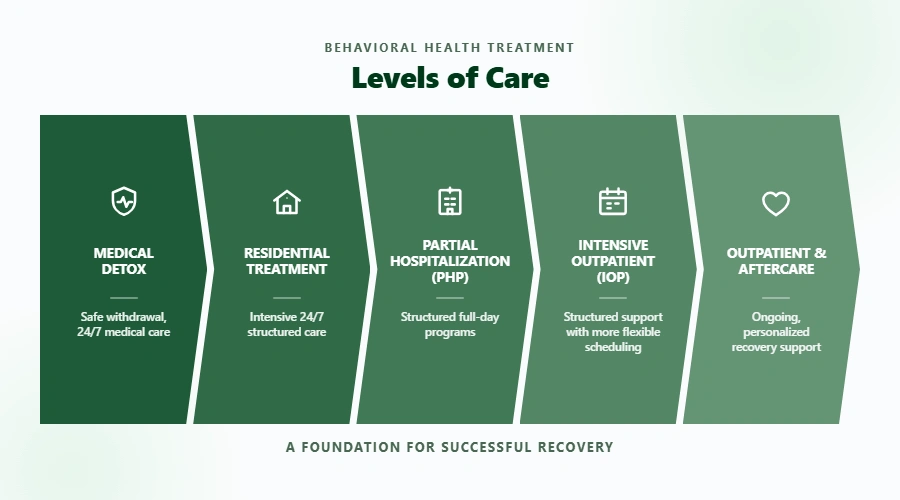
ASAM has released standardized levels of care in addiction treatment to ensure that clients receive the levels and intensity of care they need when they need it. The levels are as follows:
Level 0.5 – Early Intervention Service
This level is for people at risk of developing a substance use disorder or in the early stages of addiction. Early intervention services can help prevent the progression of addiction and reduce the likelihood of developing a more serious problem.
At this level, identifying the risk factors and warning signs of addiction is crucial. These risk factors include the following:
- History of abuse or trauma
- Poor parental support
- Lack of closer relationships
- Mental health disorders
- Peer pressure
- Substance abuse in the family
- Unstable home life
- Exposure to drugs or alcohol at an early age
This level’s goal is to prevent further drug use by providing the individual with education, support, and counseling. The focus is on helping the person develop healthy coping skills and behaviors to deal with stressors in their life.
Level 1 – Outpatient Treatment

Outpatient treatment is nonresidential and may be appropriate when an adult can participate safely while living outside a 24-hour setting. Frequency and services vary. For this staging phase, Catalina’s Tucson IOP page is the primary source for outpatient program information; admissions can explain current schedules and eligibility.
Level 2 – Intensive Outpatient Treatment and Partial Hospitalization
This general level includes intensive outpatient and partial hospitalization services for people who need more structure than routine outpatient appointments but do not require overnight residential or hospital care. Program fit depends on individualized assessment rather than completion of a mandatory sequence.
Partial hospitalization provides more structure and treatment hours than IOP while remaining nonresidential. Catalina’s PHP typically provides 5 to 7 hours of treatment per treatment day. The exact schedule, duration, and transition plan depend on clinical need and current program design.
Level 3 – Residential Services (Not Hospital Inpatient Care)
Residential treatment is a structured, live-in behavioral health setting for adults whose assessment supports this level of care. At Catalina, clients live on site and receive scheduled therapeutic support, but the program is not hospital inpatient care and does not provide emergency services, acute stabilization, or on-site medical detox.
Residential treatment may limit normal work or school participation while a person is enrolled. Suitability, duration, cost, and outcomes vary by individual; residential care is not automatically more effective than outpatient treatment.
Treatment is provided by qualified behavioral health professionals according to the program and individualized plan. When hospital-level medical or psychiatric care is needed, an appropriate outside provider must deliver those services.
Level 4 – Medically Managed Intensive Inpatient Services

The highest level of care under ASAM’s levels of care is medically managed intensive inpatient service. This hospital-based level may be appropriate for people who require 24-hour medical monitoring because of acute addiction-related or medical needs. Catalina does not provide Level 4 hospital care, emergency services, or on-site medical detox. After acute needs are addressed by an appropriate outside provider, Catalina’s admissions team can discuss whether adult residential, PHP, IOP, or outpatient treatment may be an appropriate next step.
At this level, withdrawal management is also a key component of treatment. Some adults may need medical detox, hospital-based stabilization, medical clearance, or another medical step before beginning residential treatment, PHP, IOP, or outpatient services at Catalina.
Our admissions team can help discuss general next steps when a higher medical level of care may be needed before admission.
Contact Admissions About Addiction Treatment Availability
Find the Right Addiction Treatment at Catalina
If you or someone you know is struggling with addiction, it is important to seek out dedicated support that truly cares about your success. Addiction is a disease that can be difficult to overcome on one’s own, and professional help can make all the difference.
Catalina Behavioral Health offers levels of care in addiction treatment that can meet the needs of any individual. From our beautiful setting to our evidence-based treatment plans, we are here to help you every step of the way. Contact Admissions to speak with them about the right level of care for your needs, and join our recovery family today!
FAQs on Levels of Care at Catalina
What levels of care does Catalina Behavioral Health offer?
Catalina Behavioral Health offers residential treatment, partial hospitalization programming, intensive outpatient programming, and outpatient services for adults in Tucson, Arizona. The appropriate level of care depends on each person’s symptoms, support needs, treatment history, and overall stability.
How do I know which level of care I need?
The right level of care depends on several factors, including substance use history, mental health symptoms, medical concerns, withdrawal risk, safety needs, home environment, and prior treatment experiences. Catalina Behavioral Health’s admissions team can help discuss whether one of its available programs may be appropriate.
Is residential treatment the same as detox?
No. Residential treatment and medical detox are different services. Medical detox focuses on managing withdrawal symptoms in an appropriate medical setting. Residential treatment provides structured addiction and behavioral health support after a person is medically stable enough to participate in treatment.
What should I do if I think I need detox before treatment?
If you may be experiencing withdrawal symptoms or are concerned about detox, it is important to seek appropriate medical guidance. Catalina Behavioral Health’s admissions team can discuss your situation and help review general next steps before residential care, PHP, IOP, or outpatient treatment.
Can I start treatment at Catalina immediately after detoxification?
Some adults may be able to begin treatment after completing detox or receiving medical clearance, depending on their needs and clinical appropriateness. Admissions decisions are made individually and may consider medical history, withdrawal risk, mental health symptoms, safety needs, and current stability.