


UnitedHealthcare plans may include benefits for some addiction and mental health services. Benefits depend on the specific plan, authorization, medical necessity, network status, services provided, and cost-sharing.
Catalina Behavioral Health can review available benefit information before treatment. Verification is an estimate and is not authorization, approval, or a guarantee of coverage or payment.
Does United HealthCare Pay for Alcohol or Drug Rehab Programs?
Rehabs that take UnitedHealthcare may be an option for adults in Arizona who need help understanding whether their insurance plan includes benefits for drug or alcohol treatment. Catalina Behavioral Health works with adults and families who are trying to verify coverage, understand possible out-of-pocket costs, and determine whether a UHC insurance plan may help with treatment at our Tucson-based program.
UnitedHealthcare coverage varies by plan. Benefits may depend on the member’s policy, network status, deductible, copay or coinsurance, medical necessity review, authorization requirements, and the level of care recommended after assessment. Our admissions team can review your insurance information confidentially and help explain what your plan shows before admission decisions are made.
If you or someone else is in immediate danger, call 911. If you need immediate support, call or text 988.
Free Insurance Coverage Verification
The Basics of UnitedHealthcare Insurance Group
UnitedHealthcare is part of UnitedHealth Group, a health care and well-being company that includes UnitedHealthcare and Optum. UnitedHealthcare offers several types of health plans, including employer-sponsored plans, individual and family plans, Medicare plans, Medicaid plans in some states, and other coverage options.
Some UnitedHealthcare members have behavioral health benefits managed through Optum. This can matter during verification because Optum may be involved in benefit review, clinical criteria, authorization, or network questions for mental health and substance use disorder care.
Because plan details vary, the most reliable next step is a confidential benefits review with Catalina Behavioral Health admissions.
Does United Healthcare Insurance Cover Substance Abuse Treatment?
Many UnitedHealthcare plans include behavioral health benefits that may apply to substance use disorder treatment. The details are not the same for every member, and coverage cannot be confirmed from the insurance carrier name alone.
Alcohol and drug rehab coverage may depend on:
- The specific UnitedHealthcare plan
- Whether behavioral health benefits are managed through Optum or another benefit administrator
- In-network or out-of-network benefit rules
- Medical necessity review
- Prior authorization requirements
- Deductible, copay, coinsurance, and out-of-pocket maximum
- The recommended level of care
- Any plan exclusions or limits
Catalina Behavioral Health can help verify UnitedHealthcare benefits for adults considering treatment in Arizona. The verification process is confidential and does not require a commitment to enter care.

What Should You Consider When Using UHC Rehab Coverage?
Treatment needs vary from person to person. Some adults may need medical detox before entering a structured program, while others may be appropriate for residential treatment, partial hospitalization, intensive outpatient care, or outpatient support.
The appropriate level of care depends on clinical needs, safety considerations, substance use history, mental health concerns, and other individual factors.
Insurance review is separate from clinical assessment. A UnitedHealthcare plan may review whether a recommended service is medically necessary and whether authorization is required before coverage applies. Catalina Behavioral Health can help coordinate the insurance verification process while admissions staff discuss treatment options that may be appropriate for the adult seeking help.
Understanding Levels of Care and UnitedHealthcare Treatment Coverage

UnitedHealthcare plans may review coverage for different levels of behavioral health and substance use disorder treatment based on the member’s plan, medical necessity, authorization requirements, network status, and the recommended clinical setting.
The right level of care is not based on insurance alone. Treatment planning may consider withdrawal risks, substance use history, mental health symptoms, medical needs, safety concerns, relapse history, home environment, and the amount of structure an adult may need to begin treatment safely.
Catalina Behavioral Health can help verify UnitedHealthcare benefits and explain what the plan shows for each level of care. Verification does not guarantee payment, but it can help adults and families understand what may be covered before treatment begins.
Medical Detox
Medically-supervised detox may be needed when stopping alcohol, opioids, benzodiazepines, or other substances could cause withdrawal symptoms that require monitoring. Detox is often the first step before residential or outpatient treatment when withdrawal risks need to be addressed before therapy and recovery work can begin.
Detox is not the same as full addiction treatment. The purpose of detox is to help the body clear substances while withdrawal symptoms and medical risks are monitored. After detox, many adults still need ongoing treatment to address cravings, coping skills, mental health symptoms, relapse patterns, family stress, and daily recovery planning.
UnitedHealthcare coverage for detox-related services may depend on the plan, the setting, medical necessity review, prior authorization requirements, and whether the detox provider is in network or out of network. Some plans may review detox separately from residential or outpatient treatment.
Admissions can help verify whether professional detox benefits appear on the plan and discuss next steps if detox is needed before entering treatment at Catalina Behavioral Health.
Does UHC Cover Inpatient Rehab and Residential Treatment?
Residential treatment provides structured support in a treatment setting where adults stay overnight while receiving care. This level of care may be appropriate when someone needs more support than outpatient appointments can provide, especially if substance use, cravings, mental health symptoms, relapse history, or home stressors make it difficult to stabilize in a less structured setting.
Residential care may include individual therapy, group therapy, family support when appropriate, relapse prevention planning, coping skills development, behavioral health support, and discharge planning. The daily schedule is more structured than outpatient care because the adult is living in the treatment environment.
UnitedHealthcare coverage for residential treatment may depend on the plan’s behavioral health benefits, network status, medical necessity review, prior authorization, continued stay review, and clinical documentation. Some plans authorize residential treatment for an initial period and then review whether continued care remains medically necessary.
Outpatient Therapy and Counseling
Outpatient therapy and counseling may be appropriate for adults who do not need a residential, partial hospitalization, or intensive outpatient schedule. This level of care usually involves scheduled appointments rather than full-day programming.
Outpatient support may include individual therapy, group counseling, family counseling, relapse prevention, mental health support, medication-related follow-up, and ongoing recovery planning when clinically appropriate. It may also be used after a higher level of care to help maintain progress and support long-term stability.
Outpatient care may be a fit for someone who has a stable living environment, lower withdrawal risk, manageable symptoms, and enough support to attend appointments while continuing daily responsibilities. It may not provide enough structure for someone who is in active withdrawal, has repeated relapses, or needs daily clinical support.
UnitedHealthcare outpatient behavioral health coverage may depend on the plan, provider network, copay or coinsurance, deductible status, visit limits, and whether specific services require authorization.
Admissions can help verify outpatient benefit information and explain what the plan shows.
Partial Hospitalization Program (PHP)
A partial hospitalization program is a highly structured level of care that does not include overnight housing. Adults in PHP typically participate in treatment several hours per day, several days per week, while living outside the treatment setting or in supportive housing when available and appropriate.
PHP may be considered when someone needs more support than a standard outpatient schedule but does not require 24-hour residential care. It may also be used as a step-down level of care after residential treatment when continued structure is still needed.
PHP may include group therapy, individual therapy, behavioral health support, relapse prevention planning, coping skills work, mental health education, and discharge planning. The schedule is more intensive than an intensive outpatient program because treatment takes up a larger part of the day.
UnitedHealthcare coverage for PHP may depend on whether the plan includes this level of care, whether authorization is required, whether the service is considered medically necessary, and whether the provider is in network or out of network.
Admissions can help verify PHP benefits and explain what the plan shows before treatment begins.
Intensive Outpatient Program (IOP)
An intensive outpatient program provides scheduled treatment several days per week while allowing adults to live outside the treatment setting. IOP may be appropriate when someone needs consistent support but can safely manage evenings, overnight hours, and daily responsibilities outside of a residential or partial hospitalization setting.
IOP may be used as a starting level of care for some adults or as a step-down after residential treatment or PHP. It can provide structure while allowing space for work, family responsibilities, school, or rebuilding routines.
IOP may include group therapy, individual counseling, relapse prevention, coping skills, emotional regulation support, family involvement when appropriate, and planning for long-term recovery. The schedule is more intensive than standard outpatient therapy but less intensive than PHP.
UnitedHealthcare coverage for IOP may depend on plan benefits, authorization requirements, medical necessity review, network status, and any limits on outpatient behavioral health services.
Admissions can help verify whether IOP benefits are listed on the plan and whether prior authorization may be needed.
Medication Management
Medication management may be part of treatment when an adult needs evaluation or follow-up for medications related to mental health symptoms, cravings, withdrawal support, sleep, mood, anxiety, or other behavioral health concerns. Medication decisions are made by qualified medical professionals based on the adult’s needs and clinical situation.
Medication management is not a stand-alone solution for every person. It may be used alongside therapy, group support, relapse prevention planning, and other treatment services when clinically appropriate.
UnitedHealthcare coverage for medication management may depend on the plan, provider type, appointment setting, network status, pharmacy benefits, prior authorization rules, and whether the medication or service is covered.
Admissions can help verify whether medication management benefits appear on the plan and whether separate pharmacy or medical benefit rules may apply.
Medication-assisted Treatment (MAT)
Medication-assisted treatment, often called MAT, may be used for certain substance use disorders when clinically appropriate. MAT can involve approved medications combined with counseling, behavioral therapies, and recovery support. It is commonly discussed in relation to opioid use disorder and alcohol use disorder, though the right approach depends on the adult’s clinical needs.
MAT is not simply “replacing one substance with another.” When used appropriately, it is a structured treatment approach that may help reduce cravings, support stability, and lower certain risks while the adult participates in ongoing care.
UnitedHealthcare coverage for medication-assisted treatment may depend on the plan, medication, prescriber, pharmacy benefits, treatment setting, authorization requirements, and whether the provider is in network or out of network.
Admissions can help verify whether MAT-related benefits appear on the plan and explain what information may need to be reviewed.
Co-occurring Disorders or Dual Diagnosis Services
Dual diagnosis treatment may be appropriate when substance use and mental health symptoms occur together. Many adults seeking treatment for alcohol or drug use also experience depression, anxiety, childhood trauma symptoms, mood changes, grief, or other behavioral health concerns.
When both substance use and mental health symptoms are present, treatment planning may need to address both areas. Focusing only on substance use without considering mental health symptoms can leave important needs unaddressed.
Dual diagnosis treatment plans may include therapy, group support, medication management when appropriate, coping skills, relapse prevention, emotional regulation work, and discharge planning. The exact services depend on the adult’s needs and the level of care recommended.
UnitedHealthcare coverage for dual diagnosis treatment may depend on behavioral health benefits, substance use disorder benefits, medical necessity review, authorization requirements, and the specific services being provided.
Admissions can help verify how the plan lists mental health and substance use disorder benefits.
Trauma-informed Therapy for PTSD
Trauma-informed therapy recognizes that past trauma, chronic stress, grief, violence, loss, or unsafe environments can affect substance use, mental health symptoms, relationships, and recovery. Trauma-informed care does not require someone to share every detail of painful experiences before they are ready.
This type of support focuses on safety, trust, emotional regulation, coping skills, and helping adults understand how trauma may affect present-day patterns. For some adults, trauma therapy may be part of a broader treatment plan for substance use and mental health concerns.
UnitedHealthcare coverage for trauma-related therapy may depend on the plan’s behavioral health benefits, provider network, diagnosis, treatment setting, authorization requirements, and whether the service is included under the member’s policy.
Admissions can help verify whether therapy benefits appear on the plan and whether trauma-informed services may be part of treatment at Catalina Behavioral Health.
Step-Down Care
Many adults move through more than one level of care. A person may begin with detox, then enter residential treatment, then step down to PHP, IOP, or outpatient counseling. Others may begin directly in outpatient care if that level is appropriate.
Step-down care can help reduce the gap between intensive treatment and everyday life. It may provide continued support while adults practice recovery skills, return to work or family responsibilities, strengthen support systems, and plan for long-term stability.
UnitedHealthcare may review each level of care separately. A plan may cover one level of care differently than another, and authorization requirements may change as treatment needs change.
Catalina Behavioral Health admissions can help verify benefits for each level of care being considered and explain what the plan shows before treatment begins.
Case Management
Case management may be part of treatment when an adult needs help coordinating practical needs during recovery. Substance use and mental health concerns can affect many parts of life, including medical appointments, family responsibilities, housing, employment, transportation, legal concerns, and connection to ongoing support.
Case management is different from therapy. Therapy focuses on emotional, behavioral, and clinical needs. Case management focuses on coordination, planning, referrals, and identifying barriers that could interfere with treatment participation or stability after discharge.
Case management may include discharge planning, community resource referrals, coordination with approved outside providers, communication with family members when permitted, and support with next steps after treatment. For adults managing several needs at once, this support can make the transition from structured care into daily life more organized.
UnitedHealthcare coverage for case management may depend on the plan, treatment setting, level of care, authorization requirements, and whether case management is included as part of the covered program.
Relapse Prevention Planning
Relapse prevention planning helps adults identify triggers, warning signs, high-risk situations, coping strategies, and support systems before they leave treatment. The goal is to create a practical plan for what to do when cravings, stress, conflict, or old patterns become difficult to manage.
Relapse prevention is not about shame or blame. Recovery often involves learning to recognize patterns earlier and respond with support instead of waiting until a situation becomes urgent.
A relapse prevention plan may include strategies for managing cravings, avoiding or preparing for high-risk environments, building sober support, attending follow-up appointments, handling family or work stress, and knowing who to contact when extra help is needed.
For adults with co-occurring mental health symptoms, relapse prevention may also include planning around anxiety, depression, trauma-related symptoms, grief, sleep problems, loneliness, or other concerns that can affect recovery.
UnitedHealthcare coverage for relapse prevention planning may depend on the level of care, treatment setting, and plan benefits. In many cases, relapse prevention is included within residential treatment, partial hospitalization, intensive outpatient programming, or outpatient therapy rather than listed as a separate service.
How Long Does UHC Cover for a Rehab Stay?
UnitedHealthcare coverage for a rehab stay depends on the plan and the review process. Some plans review treatment one level of care or one authorization period at a time. Continued coverage may depend on medical necessity, progress, clinical documentation, and the plan’s requirements.
The length of treatment is not determined by insurance alone. Clinical needs, safety considerations, treatment history, mental health concerns, and the recommended level of care can all affect planning. Catalina Behavioral Health admissions can help verify what your UnitedHealthcare plan shows and explain whether ongoing review may be part of the process.
What More Should I Know About Rehabs That Accept United Healthcare for Substance Abuse and Mental Health Treatment?

Adults searching for rehabs that take UnitedHealthcare for substance abuse often need two answers right away: whether their plan may help pay for care and what level of support may be appropriate.
Catalina Behavioral Health can help with the insurance side of that process by verifying UnitedHealthcare benefits and explaining the information our admissions team receives.
Substance use disorder benefits may vary across UnitedHealthcare plans. Coverage may also differ for alcohol treatment, opioid treatment, benzodiazepine-related care, stimulant use, co-occurring mental health concerns, and other clinical needs. The safest way to understand your options is to verify the plan before making assumptions about cost or coverage.
Licensed Addiction Treatment
Ensuring You Receive Rehab Coverage with UHC
Catalina Behavioral Health can help adults and families understand UnitedHealthcare benefit information before treatment begins. Our admissions team can review the insurance card, verify available behavioral health benefits, and explain what the plan shows for substance use disorder treatment.
Depending on the plan, insurance review may include questions about network status, deductible, copay, coinsurance, authorization, and the level of care being considered. If prior authorization is needed, admissions can help identify what information may be required for review.
Insurance verification is confidential and does not require a commitment to enter treatment.
How to Find United Healthcare Substance Abuse Treatment Facilities
Finding a UnitedHealthcare substance abuse treatment facility starts with verifying the plan, not guessing from the insurance logo. Two adults may both carry UnitedHealthcare cards and still have different behavioral health benefits, network rules, authorization requirements, and out-of-pocket costs.
Catalina Behavioral Health admissions can review your UnitedHealthcare information and help determine whether your plan may be usable for treatment at our program in Tucson. This review can also help clarify whether the plan uses Optum for behavioral health benefits and whether additional review steps may apply.

Specifics of the UnitedHealthcare Plan
UnitedHealthcare plans can vary widely. Employer-sponsored plans, individual and family plans, Medicare-related plans, Medicaid-related plans, and short-term plans may each handle behavioral health benefits differently.
Important plan details may include:
- Member ID and group number
- Behavioral health benefit administrator
- In-network and out-of-network benefits
- Deductible status
- Copay or coinsurance
- Out-of-pocket maximum
- Prior authorization requirements
- Covered levels of care
- Pharmacy or medication-related benefits
- Exclusions or limitations
Catalina Behavioral Health can help review these details during confidential insurance verification.
How Important Is It That My Treatment Facility Be Part of My UHC Network?
Network status can affect the cost of care. In-network providers have contracted arrangements with the insurance plan. Out-of-network providers may still be covered under some plans, but member costs can be higher, and some plans do not include out-of-network benefits for certain services.
UnitedHealthcare members should not assume that coverage is available or unavailable based only on the name of the insurance carrier. Catalina Behavioral Health admissions can verify whether your plan shows in-network or out-of-network benefits and explain what that may mean for treatment costs.
What Should I Do If My United Healthcare Plan Doesn’t Pay for Treatment?
If UnitedHealthcare benefits are limited, unavailable, or unclear, Catalina Behavioral Health admissions can help review what the plan shows and discuss possible next steps. Some situations involve deductible costs, out-of-network rules, authorization requirements, excluded services, or a plan that does not apply to the requested level of care.
Our admissions team can explain the verification results in plain language. If Catalina Behavioral Health is not the right fit based on coverage or clinical need, admissions can help discuss appropriate alternatives or resources.
Know the Difference Between Network Providers

In-network and out-of-network benefits can make a major difference in how a UnitedHealthcare plan responds to treatment costs.
An in-network provider has a contract with the plan or benefit administrator. This may reduce the member’s cost when the service is covered and requirements are met. An out-of-network provider does not have the same type of contract. Some plans still include out-of-network benefits, while others do not.
A benefits verification can help clarify:
- Whether the plan lists in-network or out-of-network benefits
- Whether Catalina Behavioral Health may be usable under the plan
- Whether authorization is required
- What deductible or coinsurance may apply
- Whether the plan has limits or exclusions for certain services
Catalina Behavioral Health can help verify these details confidentially.
How Does UnitedHealthcare Insurance Verification for Rehab Work?
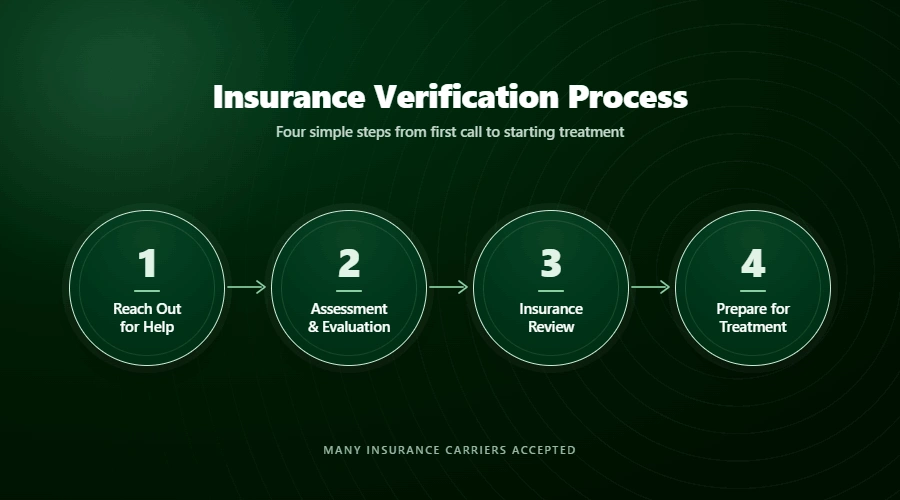
UnitedHealthcare insurance verification is a confidential review of your plan benefits before treatment begins. This process helps identify what the plan shows for behavioral health and substance use disorder care.
When you call Catalina Behavioral Health admissions, it helps to have:
- Your UnitedHealthcare insurance card
- The member’s full name and date of birth
- Member ID and group number
- The phone number listed on the back of the card
- The policyholder’s name, if different from the person seeking treatment
- Any secondary insurance information, if available
Admissions may review deductible status, copay, coinsurance, out-of-pocket maximum, network status, authorization requirements, and covered levels of care. Verification does not guarantee payment, but it can give you a clearer understanding of what your plan shows before admission.
24 Hour Rehab Support Hotline – Get Help Now
Find Effective Recovery Support at Catalina Using UHC
Catalina Behavioral Health helps adults in Arizona take the next step toward treatment with clear, confidential admissions support.
If you have UnitedHealthcare insurance, our team can verify your benefits, explain the information we receive, and help you understand whether your plan may apply to care at our Tucson program.
Insurance questions can feel overwhelming, especially when treatment decisions already feel urgent. You do not need to sort through the details alone. Call today to speak with admissions about UnitedHealthcare verification and available treatment options for adults.
FAQs About United Healthcare Rehab Coverage in Arizona

Does UnitedHealthcare cover addiction or mental health treatment?
UnitedHealthcare plans may include behavioral health benefits for substance use treatment, mental health care, detox, residential treatment, PHP, IOP, or outpatient services. Coverage depends on the specific plan, medical necessity, prior authorization, network status, and cost-sharing rules.
Is Optum related to UnitedHealthcare behavioral health coverage?
Many UnitedHealthcare behavioral health benefits are administered through Optum. The exact process can vary by plan, employer group, and state. Catalina’s admissions team can help verify whether UHC or Optum requirements apply to your treatment benefits.
Can I use out-of-network UnitedHealthcare benefits for treatment?
Some UnitedHealthcare plans may include out-of-network benefits, while others may limit coverage to in-network providers. Out-of-network care can involve higher costs. Benefits should be verified before treatment so you understand possible deductibles, copays, coinsurance, and authorization requirements.
Does UnitedHealthcare require prior authorization for rehab?
Some UnitedHealthcare or Optum plans may require prior authorization for detox, residential treatment, PHP, IOP, or other behavioral health services. Authorization requirements depend on the plan and level of care, and approval is not guaranteed by verification alone.
Does Catalina Behavioral Health accept UnitedHealthcare?
Catalina Behavioral Health can help verify UnitedHealthcare benefits for adults considering treatment in Arizona. Coverage depends on the specific plan, network status, level of care, medical necessity review, and authorization requirements. Call admissions for confidential verification.
Is Catalina Behavioral Health in network with UnitedHealthcare?
Network status can vary by plan and benefit administrator. Some UnitedHealthcare members may have in-network benefits, out-of-network benefits, or limited behavioral health coverage. Admissions can verify what your plan shows and explain the results.
Does UnitedHealthcare cover individual counseling?
Many plans include behavioral health benefits that may apply to individual counseling, but coverage depends on the policy. Deductibles, copays, visit limits, network rules, and authorization requirements may apply.
Does UnitedHealthcare cover family or group counseling?
Family and group counseling may be covered under some behavioral health benefits when clinically appropriate and included in the plan. Admissions can help verify whether these services appear under your UnitedHealthcare benefits.
Does UnitedHealthcare cover emergency or crisis care?
Emergency and crisis coverage depends on the plan and the situation. If there is immediate danger, call 911. If immediate emotional or crisis support is needed, call or text 988. Catalina Behavioral Health admissions can help with treatment-related insurance verification, but emergency situations require emergency support.
What information do I need when I call admissions?
Have your UnitedHealthcare insurance card available if possible. Admissions may need the member ID, group number, date of birth, policyholder name, and the phone number listed on the back of the card.
Is calling Catalina Behavioral Health free and confidential?
Yes. Calling Catalina Behavioral Health admissions for insurance verification is free and confidential. Verification does not require a commitment to enter treatment.
Can admissions tell me exactly what UnitedHealthcare will pay?
Admissions can verify available benefit information and explain what the plan shows, but insurance verification is not a guarantee of payment. Final coverage depends on the plan, eligibility, medical necessity review, authorization requirements, claims processing, and other insurance rules.
Resources
- UnitedHealth Group home page.
- Optum Provider Express: Clinical Criteria and Guidelines page.
- HealthCare.gov: Substance abuse and mental health coverage guide.
- SAMHSA National Helpline page.