

Six Olympic Athletes Who Have Sought Treatment for Mental Health Struggles
This page is going to provide some insight into an important question: how many Olympic athletes have struggled with mental health issues? As a spectator, it’s easy to see Olympians as close to superhuman. They are capable of incredible athletic feats, and they have often trained their entire lives for a single moment of glory. That’s the kind of dedication that many people have not experienced personally.
But we shouldn’t be fooled by their achievements on the court or the field. These are still human beings, and they go through difficult times as all of us do. By seeing stories of great Olympic athletes who have had challenges with mental illness in one form or another, you can gain perspective into your own struggles and know that you aren’t alone. No matter the person, and no matter their accomplishments, mental health concerns can impact everyone.
At Catalina Behavioral Health, we are proud to offer mental health services to help all people struggling with issues like anxiety and depression. Whether or not you are also facing an addiction, we can offer mental health resources that can help you fight this battle and turn the corner as soon as possible. Take a moment now to reach out and learn more.
Get Effective Trauma Treatment Options
The Pressure of Competition at the Global Level
When thinking about how mental health awareness applies to Olympic athletes, it helps to think about the world they compete in. The Olympics represent the highest possible level of competition for many sports, and for an athlete, reaching this level is the culmination of a lifetime of work. Mental health conditions tend to pop up where stress and anxiety are high, and that is certainly an apt description of the Olympic level.
The combination of physical and psychological demands adds up to a perfect recipe for a mental health crisis. It’s hard work to perform at such a high level, and plenty of off-the-field demands come along with this level of success. There are media obligations to meet, coaches to work with, fans to impress, and more. Trying to live a normal life while being in the middle of this arena really isn’t a practical, attainable goal.
Why Mental Health Struggles Are Often Hidden in Elite Sports

Historically, talking about something like mental well-being would have been a non-discussion among elite athletes. These are people who are supposed to be the strongest of the strong and the toughest of the tough. Mental and physical health were considered prerequisites for success, and any admission of vulnerability was seen as a weakness. If an Olympic athlete were to seek support for emotional pain, that may be viewed as a sign that they aren’t up to the challenge of the Olympic Games.
Fortunately, these notions are starting to change. More and more athletes have openly acknowledged their need for professional support, as we will see below. Whether it’s traditional counseling, sports psychology, or any other kind of help, it’s a good development that this subject isn’t as taboo as it used to be. Of course, there are still plenty of improvements to be made in this area, but at least we are on the right track.
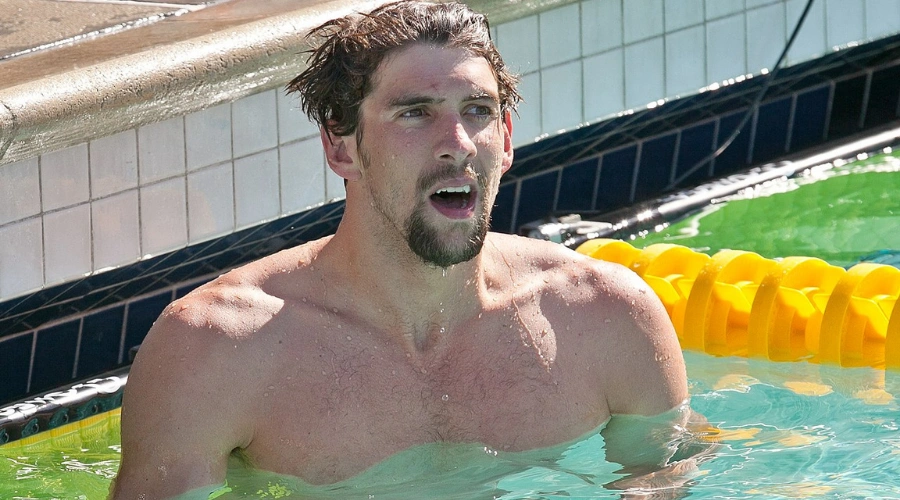
Michael Phelps and Depression
We can start our discussion of Olympians who have struggled with mental illness with perhaps the greatest of them all. In his career, Michael Phelps has won an unbelievable 23 gold medals in the pool. Without a doubt, he’s the best swimmer in history, and it’s doubtful that his achievements as a gold medalist will ever be topped.
With such an amazing resume, it would be tempting to imagine that Phelps’ life has been nothing but amazing. That’s not exactly the case, however. He has spoken openly about his experiences with depression, anxiety, and suicidal thoughts. Perhaps surprisingly to some, many of these issues have come up in the aftermath of major competitions, during which Phelps was usually wildly successful.
Winning Olympic gold does not automatically address mental health struggles like many people might be tempted to believe it would. In fact, after the 2012 London Olympics, Phelps said he felt lost and empty inside. He wound up dealing with substance use and legal troubles before getting help. Over time, he was able to learn healthier coping strategies, and much to his credit, has become an outspoken advocate for mental health awareness.
Simone Biles Prioritizing Mental Health
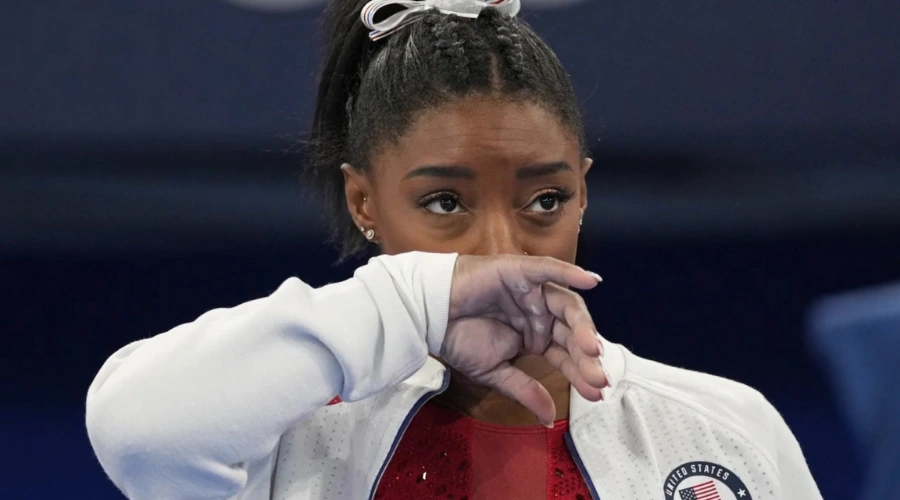
During the summer Olympics every four years, no sport draws more attention than gymnastics. And, as one of the best of all time, no athlete was set to draw more eyes in the Tokyo Olympics than Simone Biles. She was the face of Team USA and the favorite to take home multiple medals.
So, it was a shocking turn of events when Biles decided to step back from many events in those Tokyo games. She was not dealing with physical injury recovery, but rather mental health challenges. Her self-doubt in that moment had developed into something gymnasts call the “twisties”, and she was largely overcome with performance anxiety. Instead of pushing ahead due to the weight of expectation, Biles decided to step back and let other athletes take the spotlight in her place.
This choice made huge waves in both directions. Some criticized her for not “being tough” and stepping up for her country. Plenty of others praised her for valuing mental health and not forcing herself to do something that she didn’t feel was right at the time. When the Paris Olympics rolled around in 2024, Biles was back to feeling like herself and dominated the event, winning three golds, making her a seven-time Olympic gold medalist.
Naomi Osaka and Anxiety in the Spotlight

Tennis players are no strangers to big moments. In addition to the top players getting to participate in the Olympics every four years, there is also a grand slam tournament to play in four times each year. Needless to say, the top tennis players in the world are used to the big moments and big pressure.
Naomi Osaka was a tennis prodigy from a young age and has competed all around the world. Despite tremendous success, she has also spoken openly about dealing with anxiety and depression. In her case, these seemed to stem specifically from the pressure that comes from the public and the media when playing at a high level. Athletes live in a bubble in many ways, and that can take a serious toll.
To deal with her mental health, Osaka chose to step back from some of her media commitments and also to take a break from playing at times. Her story, and her willingness to talk about the struggles she’s been through, have resonated with a younger generation of sports fans.
Allyson Felix and Motherhood
The Olympics are a big deal for anyone who qualifies to compete. For track athletes, however, this really is the pinnacle of the sport and the moment when they get to shine the brightest. As one of the most decorated track and field Olympians in U.S. history, Allyson Felix knows all about what it means to be ready and deliver in the big moment.
She has also known her share of struggles. Specifically, Felix has dealt with mental strain after returning to the sport following the birth of her child. Adding to that strain was a system that didn’t necessarily support her needs during that journey. The struggles she encountered were specific to female athletes, and her willingness to share what she went through has helped many others push for improvements in athlete equality and overall well-being.
Shaun White Facing Anxiety Behind the Scenes

No one has had as much success on a snowboard as Shaun White. While it takes tremendous confidence to perform on the slopes at the level that White has throughout his career, he’s also been open about discussing his issues with anxiety and panic attacks. White has stated that such problems have affected his sleep, focus, and overall well-being, which makes what he accomplished as an Olympian all the more impressive.
All athletes face an expectation of being tough and almost invincible, but those who compete in extreme sports feel that pressure even more acutely. They are supposed to be brave and face challenges head-on, but that persona isn’t in alignment with human nature. All humans go through difficult internal experiences, and White has been brave enough to talk openly about those that he has gone through during his career.
Laurie Hernandez Battled Depression
Like Biles, gymnast Laurie Hernandez has seen success at the highest levels of her sport. She was a star in the Rio Olympics and appeared from the outside to be on top of the world after achieving so much so early in her life. Of course, things on the inside weren’t quite as they seemed on the outside, and like so many others, she was dealing with mental health difficulties.
Specifically, Hernandez struggled to figure out who she was outside of her sport. All of her energy and focus were placed on thriving on the Olympic stage, and while she did achieve that, life moves on after the competition is over. That’s where she found herself confronting depression and general identity struggles related to living a fulfilling life away from the gym.
The Common Threads in These Mental Health Stories

Why would so many great athletes who have achieved so much in their professional lives struggle with mental health? There are a few lessons we can learn from these stories. First, and most simply, we are all human. No matter what we achieve or accomplish in our chosen pursuits, human nature is within all of us, and mental health challenges can come along with that nature.
Additionally, there is a pressure that comes from being an Olympic-level athlete that is hard to deal with, even for the best. The expectations that are placed on the athlete by others, along with internal expectations, can make it hard to enjoy life away from the arena. Even when winning gold medals and becoming famous around the world, the pressure is always felt, and it can be crushing.
Finally, these stores all highlight the importance of talking openly about mental health in its various forms. While most people don’t have the platform of a famous Olympian to share their struggles, everyone can help by talking with those around them. Anyone’s story can lead to others opening up about what they are going through, and collectively, everyone can feel validated and seen. The more the light shines on mental health, the less likely it is that anyone has to suffer alone in a dark place.
Up To 100% of Rehab Costs Covered By Insurance
It’s Not About Mental Toughness: Support Matters
The fact that elite athletes deal with mental health challenges like everyone else proves that this is not about just being mentally tough. These professional athletes are extremely tough, both physically and mentally, but that doesn’t prevent them from experiencing mental health problems.
In this situation, the strongest thing you can do is reach out and admit you need mental health support. Support is available here at Catalina Behavioral Health. Make today the day that everything changes. Our phones are always open: make the call now, and let’s talk about this serious situation.
Each and every call is confidential, so please call us today for proven support options.
REFEERENCES
- Reardon, C. L. (2023). The mental health crisis in sports: The perfect storm of contemporary factors. Journal of Athletic Training, 58(9), 677–680.
- McLean Hospital. (2025, October 17). Strength isn’t just physical: Exploring athletes’ mental health. Deconstructing Stigma.