

Get a Trauma Self Assessment and Resources from Catalina
You may have a sense of past trauma, or you may simply be curious about such responses and how to better observe and control them. In either case, you have arrived at the right resource!
Gaining a better understanding of your likeliest trauma responses can help predict your ability to recover after a traumatic event. Trauma response refers to your immediate reaction to a perceived or real threat. Most people know this by the phrase, “Fight, flight, freeze, or fawn.”
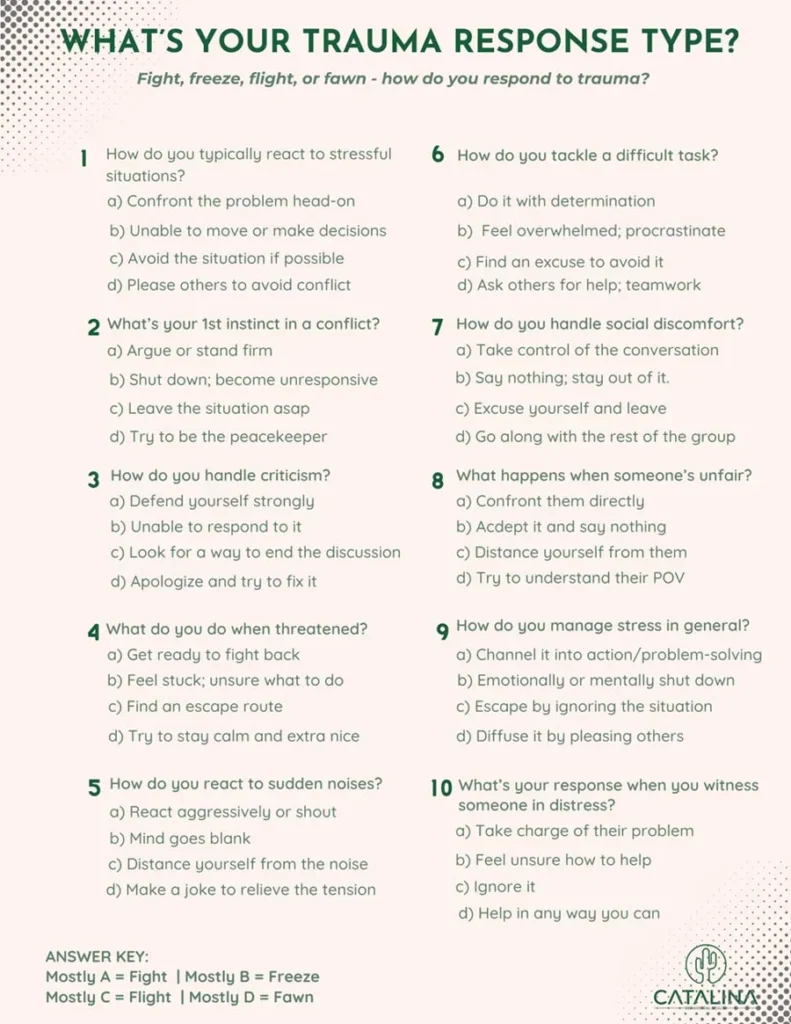
Our trauma response quiz gives you ten multiple-choice questions, asking for your initial reaction to different scenarios. Knowing this will help you on your growth and healing journey.
Catalina Behavioral Health understands that most will struggle with their mental well-being at some point on their life’s journey. With our professional help, thousands have recovered from the intense emotions that often originate in trauma.
Keep reading to learn more about the trauma responses and how your past experiences may mean you should seek professional support or therapy after a traumatic event.
Confidential Trauma and PTSD Assessment
Trauma Response Self-Assessment ( Trauma Quiz)
Our trauma quiz is not a formal diagnostic tool and cannot diagnose PTSD or any psychiatric disorder. Only a licensed mental health professional can make a formal diagnosis of PTSD or another psychiatric mental health condition.
Instead, the quiz helps you consider your mental health and your own trauma response.
While the quiz is insightful and can help you understand your path forward after trauma, trauma response quizzes are not diagnostic tools but screening instruments based on established criteria like the DSM-5. The PTSD Checklist for DSM-5 (PCL-5) is a standard tool for assessing potential PTSD symptoms, and trauma tests are structured to assess symptoms related to post-traumatic stress disorder (PTSD) and help individuals better understand their psychiatric mental health condition.
Be sure to seek professional support for your trauma and the negative thoughts and memories you may still carry. You are also able to download and print our PDF to bring along and help a clinician better understand how to help. Individuals scoring highly on trauma quizzes are encouraged to consult a professional for a comprehensive evaluation.
Trauma response quizzes help people validate their current struggles as rooted in past experiences, reducing self-blame. Scores from trauma response quizzes indicate the likelihood and intensity of trauma symptoms, serving as a preliminary evaluation.
Along with our childhood trauma test, both can be powerful ways of bringing issues to light so they can more easily be addressed and processed.
Why Is It Important to Know Your Trauma Response Type?
Predicting how you may respond to a traumatic event is important to your mental health for these reasons:
Self-Awareness and Recognition of Your Trauma Healing Style
Our trauma response quiz can alert you to how you might react to a future stressful situation. This self-awareness helps you recognize when you’re in a heightened state of response and helps you respond and heal more quickly. The quiz helps you examine some past experiences to predict how you may behave in the future.
Improved Coping Strategies and Resilience
Different trauma responses require different coping tools. When you know if you are a fight, freeze, fawn, or flight type, you can prepare for a full spectrum of possibilities by mastering the necessary recovery strategies before you need them.
For example, a “freeze” might mean you tend to be unable to speak during trauma. Because you know this will be a likely reaction at some point, you can learn a few healthy trauma coping strategies to apply in stressful situations. For example, you might master deep breathing so that in the future you’ll be able to center yourself and speak up during a stressful event.
Better Communication and Stronger Relationships
Knowing your trauma response type can improve how you communicate with your loved ones. For instance, you may learn that you react to traumatic experiences with anger (“fight” type) when you take the quiz. Then, you communicate the results to your family and friends and establish healthy boundaries using this information.
Working With Your Mental Health Professional More Effectively
Those who attend therapy with a mental health professional can use their trauma response to develop personalized treatment plans. Therapists use this knowledge to craft treatment options that address your specific therapy needs.
How Traumatic Events Can Influence Trauma Responses

Trauma responses come from traumatic experiences, often stemming from childhood trauma. Childhood experiences are molded by the nature of the threats faced, primarily as children through young adTrauma responses come from traumatic experiences, often stemming from childhood trauma. Childhood experiences are molded by the nature of the threats faced, primarily as children through young adulthood. Examples of some factors that can influence this are the following:
You might be interested in
- Domestic violence
- Sexual assault
- Physical abuse
- Verbal abuse
- Emotional abuse
- Toxic relationships
- Ongoing mental health issues in the home
- Natural disasters
- Sudden death
Complex trauma often has an interpersonal nature, arising from multiple and invasive social or relational experiences such as abuse, neglect, or violence. Complex trauma, or complex PTSD, often results from prolonged exposure to traumatic situations, especially those involving close relationships.
As the child grows up, they may manifest symptoms of trauma, such as unexplained fear, negative thoughts, flashbacks, nightmares, or difficulty concentrating. Immediate reactions to trauma often include confusion, anxiety, and emotional numbness, while delayed reactions can manifest as sleep disorders and persistent anxiety.
Symptoms of trauma can include hyperarousal symptoms, difficulty sleeping, and intrusive thoughts. Surviving a chaotic childhood with little adult guidance or support can further complicate matters.
Some children are very resilient and grow out of these feelings. But others need treatment to lead a happy, productive life.
Understanding the many causes of trauma is crucial for recognizing its signs and symptoms in ourselves and others.
Addressing Traumatic Memories: Why They Matter
Addressing traumatic memories is a vital part of the healing journey for anyone who has experienced a traumatic event, whether it’s domestic violence, physical or sexual assault, childhood trauma, or ongoing childhood neglect.
These memories can deeply affect your emotional and psychological state, often leading to mental health issues such as post traumatic stress disorder (PTSD), anxiety, depression, or other mental health conditions.
Traumatic memories don’t always stay in the past: they can be triggered by everyday sights, sounds, smells, or even emotions, causing intense emotions, flashbacks, and physical symptoms like difficulty concentrating or trouble sleeping. For many, these symptoms can feel overwhelming and may interfere with daily life, relationships, and overall mental well-being.
Working with a licensed mental health professional is essential for processing traumatic memories in a safe and supportive environment. A mental health professional can help you develop coping strategies to manage your trauma response, establish healthy boundaries, and improve emotional regulation. This is especially important for those dealing with complex trauma or multiple traumatic events, where a deeper understanding and a personalized treatment plan are needed.
The Role of Trauma Quizzes and Assessments
While tools like the trauma quiz can help you identify trauma symptoms and gain insight into your trauma response, it’s important to remember that only a qualified mental health professional can provide a medical diagnosis and create a trauma treatment plan tailored to your needs. Treating PTSD and other trauma-related mental disorders often involves evidence-based therapies such as cognitive-behavioral therapy (CBT), dialectical behavior therapy (DBT), or eye movement desensitization and reprocessing (EMDR).
In addition to therapy, self-care practices, like physical activity, mindfulness, and connecting with supportive people, can help you maintain healthy boundaries and manage your trauma symptoms. Healing from traumatic experiences is a process, and with the right support and coping skills, it is possible to move forward and reclaim your emotional well-being.
If you’re struggling with traumatic memories, know that you’re not alone. Reaching out to a licensed or qualified mental health professional is a courageous first step toward healing. Together, you can work through your past trauma, develop effective coping strategies, and build a foundation for lasting recovery and resilience.
Marta Learned About Her “Freeze” Reaction by Taking Our Trauma Response Quiz
Marta was struggling with alcohol abuse, which is an example of substance abuse—a dysfunctional coping mechanism often associated with trauma. When the strain of her daily routine became overwhelming, drinking whiskey seemed to calm her brain. But the drinking soon became uncontrollable. Recognizing the need for professional help, Marta came to Catalina for a partial hospitalization program.
Marta learned in therapy that the alcohol was simply the straw that broke the proverbial camel’s back. She had started drinking to numb the pain of a physical assault that had occurred when she was a teenager. Her parents told her to stay quiet and don’t discuss it – they did not like calling attention to themselves. Marta had practically forgotten about the incident and did not connect it to her alcohol problem until the therapist uncovered it. Her emotional reactions, such as heightened or impulsive behaviors, were signs of trauma exposure.
Marta learned that she had a flight trauma response, running away from her problems. Or, in this case, covering it up with alcohol. Trauma responses can become maladaptive when the behavior continues to be demonstrated in non-threatening situations. As part of her treatment plan, Marta’s counselor developed trauma-informed treatment options that addressed her underlying pain.
Now, Marta no longer drinks and has started using her newfound mental health as a passion for physical fitness competitions. She’s healthier than ever and whole again.
Get Our Insights into the Four Trauma Response Types

Understanding how you process traumatic memories can help you gain insight into those sometimes inexplicable gut reactions you have to threats. These responses originate in the parasympathetic and sympathetic nervous systems, which are helpful in preparing someone to respond after trauma or a stressful situation.
1) Fight Response (Confront the Emotional Upheaval Head-on)
When an individual with a fight response encounters a threat, it will usually manifest in aggressive or confrontational behavior. They may not seek conflict. But their first reaction can be anger, verbal sparring, or physical confrontations. This trauma response comes from past experiences where they learned to stand their ground or be aggressive when life brings emotional upheaval.
The symptoms of this response in action are tight muscles, a raised voice, or clenched hands. They’re often misunderstood; violence is not intended, but they will not be a doormat, either.
2) Flight Response (An Avoidance Response)
The flight response creates an overwhelming urge to flee a negative situation or threat. This type will have a keen focus on evading danger. Trauma has taught the person to avoid places or people who remind them of a past trauma or traumatic event.
Physical symptoms of “flight” include a fast heart rate, sweating, shaking, or trembling. If they cannot leave the situation, they might pace the floor or try other forms of physical movement.
Get Effective Trauma Treatment Options
3) Freeze Response (Present But Unsure What to Do in a Traumatic Event)
Have you ever heard the expression, “deer in the headlights?” That phrase perfectly sums up the freeze trauma response.
Those who have a freeze response become immobile when faced with fear or a physical threat. They may feel helpless or numb in most stressful situations. The traumatic experience has taught this individual to do nothing and push aside their feelings or emotions until the threat has passed.
Symptoms of “freeze” include staring blankly or temporarily checking out, with this being a form of dissociation. The person might also lose focus or experience excessive anxiety during that moment.
4) Fawn Response (A Sensitive Person Considering Feelings of Others)
The fawn response often develops in someone who has experienced direct emotional or physical abuse. In these childhood experiences, appeasing a parent or another adult in early life was necessary for survival. This childhood trauma was likely unpredictable in intensity. As a result, the “fawn” learned to placate their abuser to minimize potential harm.
Symptoms of the fawn trauma response can include nodding agreeably, fidgeting, slouched shoulders, offering helpful suggestions, or apologizing. Those signals don’t necessarily mean they agree with the emotional trauma. Instead, these help cover up their real feelings of anxiety and are considered a form of trauma bonding in some cases.
What Happens if You Don’t Get Treatment for Unhealed Trauma?

When trauma is not addressed and treated, it can wreak havoc on your life. Here are some of the consequences that can happen when you don’t have therapy:
Mental Health Consequences of Unresolved Trauma
People who don’t look into treatment options for trauma may have chronic mental health issues, as trauma physically changes the brain. These might include depression, anxiety, panic, or PTSD. These conditions can cause a decline in emotional regulation, strained relationships, or feeling disconnected from friends and family.
Physical Health Impacts of Unhealed Trauma
Untreated trauma can transform into chronic stress over a prolonged time. That can strain the immune system, heart health, and circulatory system. Some also develop other physical symptoms, such as headaches, stomach issues, chronic pain, or fatigue.
Behavioral Consequences of Residual Trauma
Failing to seek support for recovery or therapy for trauma can cause overwhelming memories or traumatic events. Some turn to alcohol, drugs, or other addictions. They conflate “numbing” and “healing,” but they’re actually making things even worse. Other symptoms of a decline in behavioral health include cutting, burning, or other self-harm actions. These behaviors require immediate support, as they can spiral into something far more dangerous.
Many Forms of Insurance Accepted for Treatment
Social Consequences of Carrying Trauma
Those who carry trauma may become withdrawn or fear social interactions. In turn, they may trigger traumatic memories that lead to even more self-isolation.
Over time, isolation and loneliness can cause difficulty concentrating and a lack of motivation, which can cause far-reaching disruption to someone’s professional life.
Get Help for Trauma at Catalina Behavioral Health in Tucson

You’ve taken the trauma response quiz. What’s next?
Please call our caring clinicians at Catalina Behavioral Health if you have any questions about how our therapy can help you heal the trauma that is harming your life.
Calling us is confidential, and a mental health professional is ready to help you take the next steps. We accept most group health insurance plans as well as some forms of AHCCCS. We can even call your insurance provider to help you get approval for your trauma treatment plan.
Let’s connect and help you heal your trauma – call us confidentially for support today.
FAQs on Our Free Trauma Response Quiz
What is a trauma response quiz, and how can it help me?
A trauma response quiz is a self-assessment tool designed to help you identify how you typically react to traumatic events or stressful situations. While it is not a medical diagnosis, it provides valuable insights into your trauma symptoms and emotional and psychological state. Taking this quiz can increase your self-awareness, guide you toward appropriate mental health treatment, and encourage you to seek support from a licensed mental health professional if needed.
Can a trauma response quiz diagnose PTSD or complex trauma?
No, a trauma response quiz cannot provide a formal diagnosis of PTSD, complex trauma, or any psychiatric disorder. Only a licensed mental health professional can diagnose these conditions through a comprehensive clinical evaluation. However, the quiz can help you recognize trauma symptoms and patterns that may indicate the need for further assessment and trauma-focused therapies.
How do trauma response quizzes support the healing process?
Trauma response quizzes help individuals understand their unique trauma responses: such as fight, flight, freeze, or fawn, which is essential for developing effective coping strategies and emotional regulation. By gaining clarity on your trauma reactions, you can work with mental health professionals to create personalized treatment plans, including trauma-focused therapies and group therapy, that support your recovery and overall mental well-being.
Are there right or wrong answers on a trauma response quiz?
No, there are no right or wrong answers on a trauma response quiz. The purpose is to honestly reflect on your feelings and behaviors in response to traumatic or stressful situations. This self-reflection helps you better understand your psychological symptoms and guides you toward appropriate mental health care and support.