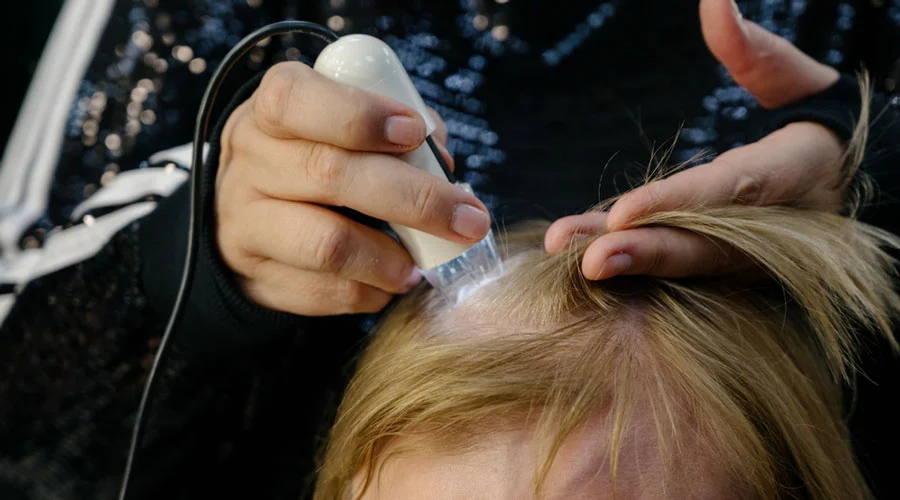
Detection Window, Limitations, and What Results May Mean
Hair alcohol testing is sometimes used in clinical, legal, workplace, or monitoring settings to evaluate patterns of alcohol exposure over time.
Many people want to know how far back the test looks, what the sample process is like, and how reliable the results are.
This guide explains what hair alcohol tests may measure, what can affect interpretation, and when it may make sense to speak with a qualified clinician if alcohol use has become difficult to manage.
Get Immediate Help For Problem Drinking
How Long Can You Detect Alcohol Consumption With a Hair Alcohol Test?
Hair alcohol testing is used mainly to evaluate longer-term alcohol exposure, not to confirm exact drinking times.
Compared with blood testing, which is used for more recent alcohol detection, hair testing may provide information about alcohol exposure over a much longer retrospective period.
In practice, scalp-hair interpretation often focuses on the most recent months, depending on the length of hair tested, the marker used, and the laboratory’s reporting standards.
Because interpretation can be affected by sample characteristics and outside factors, results should be reviewed in context rather than treated as a precise timeline of alcohol use.
What Happens During a Hair Follicle Test for Alcohol?
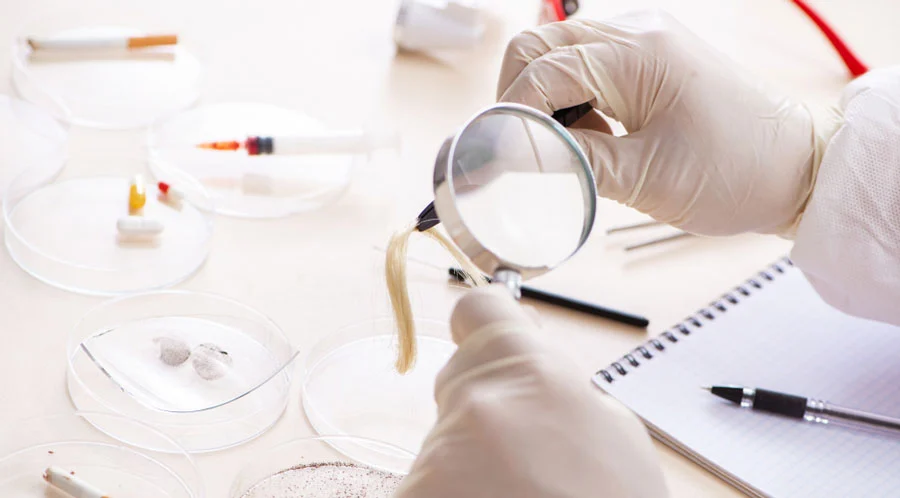
Despite the common name, a hair alcohol test usually analyzes a hair sample rather than the follicle itself.
A small amount of hair is cut close to the scalp, often from more than one area to reduce visible thinning.
In some cases, body hair may be used if scalp hair is unavailable, although interpretation can differ.
The sample is then sent to a laboratory, where alcohol-related markers such as EtG or FAEE may be evaluated.
What Can Affect Hair Alcohol Test Interpretation?
Hair alcohol test results may be influenced by several factors, including the type of marker being measured, the length and condition of the hair sample, cosmetic treatment history, and possible exposure to alcohol-containing hair products.
Because interpretation is not always straightforward, unexpected or disputed results should be reviewed with the testing laboratory or a qualified professional.
Online tips about ‘beating’ or ‘detoxing’ a hair test are not a reliable substitute for professional interpretation.
Signs Alcohol Use May Deserve A Professional Evaluation
Concern about testing is not the same thing as a diagnosis. Still, it may be worth speaking with a licensed clinician if alcohol use has started to affect your health, safety, responsibilities, or ability to cut back. Possible warning signs can include:
- Needing more alcohol than before to feel the same effects
- Finding it hard to reduce or stop drinking
- Continuing to drink despite problems at work, home, school, or in relationships
- Cravings or strong urges to drink
- Drinking in risky situations, such as before driving
- Experiencing withdrawal symptoms when cutting down or stopping
A qualified professional can help determine whether these concerns reflect risky drinking, alcohol use disorder, or another issue that needs support.
Speak with Catalina About Alcohol Treatment Options

If alcohol use is affecting your health, safety, or daily life, our team can explain available levels of care and help you understand next steps. We can also review insurance benefits and out-of-pocket considerations based on your specific plan.
To reach Catalina Behavioral Health, call the admissions line on our website. Our team is here to answer your questions or start the intake process. Calls are handled confidentially in accordance with our Privacy Policy and applicable law, so please reach out for our support today!
Verify Your Insurance Benefits
FAQs Regarding Hair Follicle Tests for Alcohol
How far back does a hair follicle test for alcohol?
Hair alcohol testing is generally used to assess longer-term alcohol exposure over recent months rather than very recent drinking.
The exact look-back window depends on the type and length of hair collected, the marker tested, and the laboratory method used.
In many consumer and monitoring contexts, scalp-hair testing is interpreted over approximately the prior 3 months when a suitable hair segment is available
How sensitive is a hair follicle test for alcohol?
Hair alcohol testing is generally more informative for repeated or heavier alcohol exposure than for occasional drinking.
Test performance can vary based on the marker used, the laboratory’s cutoff values, and individual and sample-related factors.
A positive or negative result should be interpreted in context rather than treated as a complete picture on its own.
What can cause a false positive hair follicle test for alcohol?
Some external factors, including certain alcohol-containing cosmetic or hair products, may complicate the interpretation of hair alcohol test results in some circumstances.
The effect can depend on the specific marker tested, the product involved, and the laboratory method used.
If a result seems inconsistent with the clinical picture or reported alcohol use, it should be reviewed with the testing laboratory or another qualified professional.”
References
Biondi, A., Freni, F., Carelli, C., Moretti, M., & Morini, L. (2019). Ethyl glucuronide hair testing: A review. Forensic Science International, 300, 106–119. https://doi.org/10.1016/j.forsciint.2019.05.004
Boscolo-Berto, R., Favretto, D., Cecchetto, G., Vincenti, M., Kronstrand, R., Ferrara, S. D., & Viel, G. (2014). Sensitivity and specificity of EtG in hair as a marker of chronic excessive drinking: Pooled analysis of raw data and meta-analysis of diagnostic accuracy studies. Therapeutic Drug Monitoring, 36(5), 560–575. https://doi.org/10.1097/FTD.0000000000000063
Kintz, P. (Ed.). (2019). Consensus for the use of alcohol markers in hair for supporting the assessment of abstinence and chronic alcohol consumption [Consensus document]. Society of Hair Testing. https://www.soht.org/images/pdf/Alcohol%20consensus_final_aug19.pdf
MedlinePlus. (2025, August 12). Blood alcohol level. U.S. National Library of Medicine. https://medlineplus.gov/lab-tests/blood-alcohol-level/
National Institute on Alcohol Abuse and Alcoholism. (2025, May 8). Alcohol use disorder: From risk to diagnosis to recovery. U.S. Department of Health and Human Services, National Institutes of Health. https://www.niaaa.nih.gov/publications/brochures-and-fact-sheets/alcohol-use-disorder-comparison-between-dsm
National Institute on Alcohol Abuse and Alcoholism. (n.d.). Understanding binge drinking. U.S. Department of Health and Human Services, National Institutes of Health. https://www.niaaa.nih.gov/publications/brochures-and-fact-sheets/binge-drinking
Sporkert, F., Kharbouche, H., Augsburger, M. P., Klemm, C., & Baumgartner, M. R. (2012). Positive EtG findings in hair as a result of a cosmetic treatment. Forensic Science International, 218(1–3), 97–100. https://doi.org/10.1016/j.forsciint.2011.10.009
Triolo, V., Spanò, M., Buscemi, R., Gioè, S., Malta, G., Čaplinskiene, M., Vaiano, F., Bertol, E., Zerbo, S., Albano, G. D., & Argo, A. (2022). EtG quantification in hair and different reference cut-offs in relation to various pathologies: A scoping review. Toxics, 10(11), 682. https://doi.org/10.3390/toxics10110682